
Metal Coil Processing Lines: A Complete Overview of Slitting, Shearing & Cutting Solutions
Understanding Metal Coil Processing Lines
Metal coil processing is the backbone of modern steel service centers and manufacturing operations worldwide. From automotive body panels to construction roofing sheets, virtually every flat-rolled steel product passes through one or more coil processing lines before reaching its final form. These sophisticated production systems take mother coils — large rolls of steel weighing up to 30 tons — and transform them into precisely dimensioned flat sheets, strips, or blanks ready for downstream fabrication.
This article provides a comprehensive overview of the major types of metal coil processing lines, including slitting lines, shearing lines, cut-to-length lines, flying shear lines, and blanking lines. Whether you are a steel service center operator, a metal fabricator, or an engineering professional evaluating equipment options, understanding the capabilities and optimal applications of each line type is essential for making informed investment decisions.
What Is a Metal Coil Processing Line?
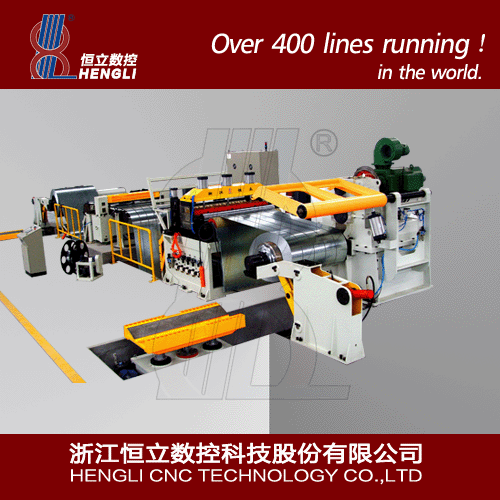
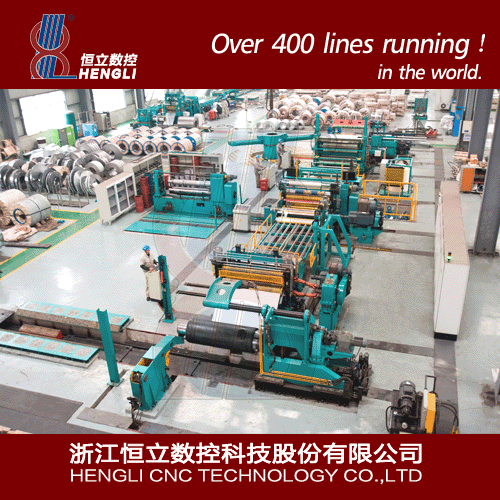
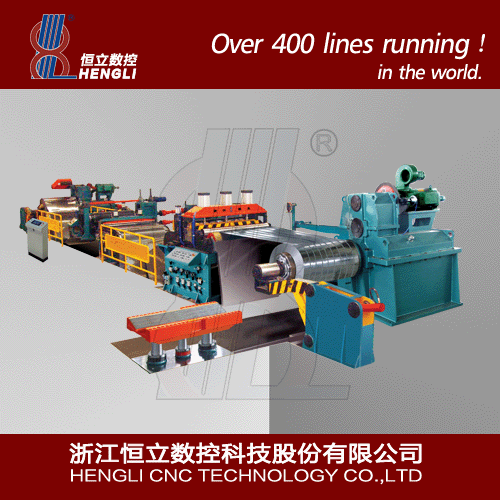
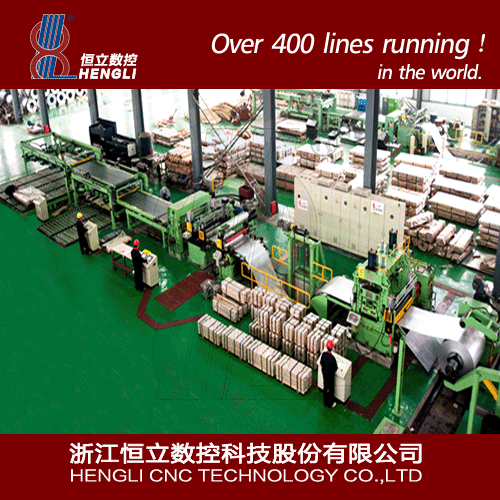
A metal coil processing line is an integrated system of machinery that unwinds a steel coil, processes the material through various operations such as leveling, cutting, slitting, or shearing, and then re-coils or stacks the finished product. These lines are designed to handle a wide range of material types, including hot-rolled steel, cold-rolled steel, galvanized steel, stainless steel, and aluminum, with thicknesses typically ranging from 0.2 mm to 25 mm depending on the line configuration.
The core components found across most coil processing lines include:
- Uncoiler / Decoiler — Holds and unwinds the mother coil under controlled tension
- Coil Car & Loading System — Transfers coils from storage to the uncoiler mandrel
- Peeler & Flattener — Initiates the strip feed and pre-levels the leading edge
- Leveler / Straightener — Removes coil set and crossbow for a flat, stress-free strip
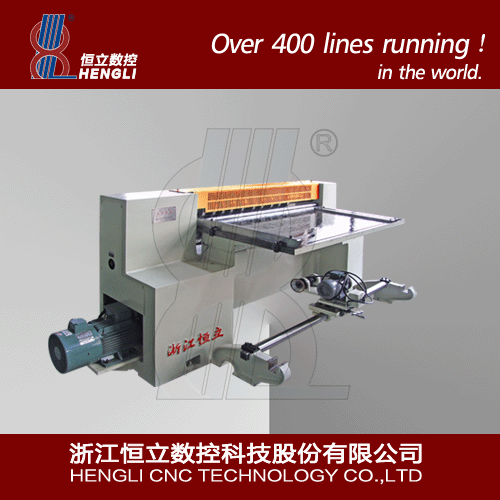
- Shear or Slitter — The primary cutting station that defines the line type
- Stacker / Recoupler — Collects cut sheets or re-winds slit strips
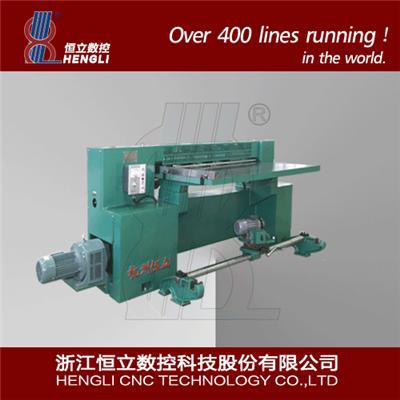
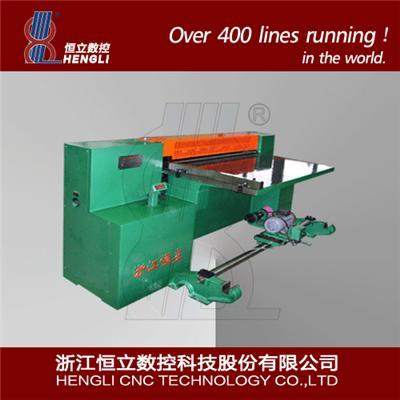
Slitting Lines: Precision Width Reduction
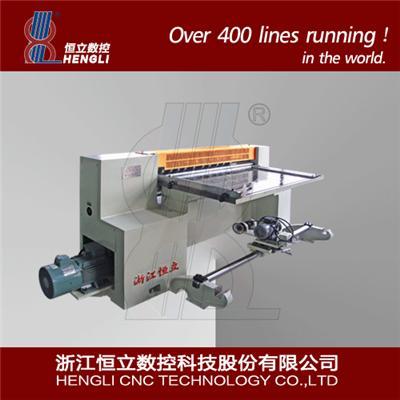
Slitting lines are designed to cut a wide mother coil into multiple narrower strips of specific widths in a single pass. The heart of a slitting line is the slitter head, which contains pairs of rotating circular knives that shear the moving strip into multiple strands. The slit strands are then re-coiled into separate smaller coils for use in downstream applications such as tube manufacturing, roll forming, stamping, and cable tray production.
Key Advantages of Slitting Lines
- High productivity — Slitting can process coils at speeds of up to 300 m/min, producing multiple narrow coils simultaneously from a single wide coil.
- Precision width tolerance — Modern slitting lines achieve tolerances within ±0.1 mm, critical for applications like automotive frame rails and structural members.
- Versatile material range — From thin tinplate (0.15 mm) for food packaging to heavy-gauge plate (12 mm) for structural components.
- Quick changeover — Advanced lines feature tool-less slitter head change systems that reduce downtime between production runs.
Slitting lines are particularly well suited for steel service centers that supply multiple customers with varying width requirements, as they offer maximum flexibility in converting master coils into customer-specific slit widths.
Cut-to-Length Lines: Precision Sheet Production
Cut-to-length (CTL) lines transform master coils into flat sheets of predetermined lengths. Unlike slitting lines that cut lengthwise, CTL lines cut across the width of the strip at precise intervals to produce individual sheets or plates. Modern CTL lines incorporate advanced levelling technology, precision measuring systems, and high-speed flying shears to deliver exceptional flatness and dimensional accuracy.
Types of Cut-to-Length Lines
There are two primary configurations for cut-to-length lines:
- Stop-Start (Static) Shearing Lines — The strip stops momentarily while the shear cuts, then advances to the next cut position. These lines are simpler and more economical but have lower throughput speeds.
- Flying Shear (Dynamic) Lines — The shear moves synchronously with the strip while cutting, allowing continuous material flow. Flying shear lines achieve significantly higher production rates, making them ideal for high-volume sheet production.
CTL lines can handle thicknesses from 0.3 mm in thin-gauge lines to 25 mm in heavy plate lines, with sheet lengths ranging from 500 mm to 16,000 mm or longer. They are essential for industries including construction (roofing sheets, wall panels), automotive (floor pans, door panels), and general fabrication.
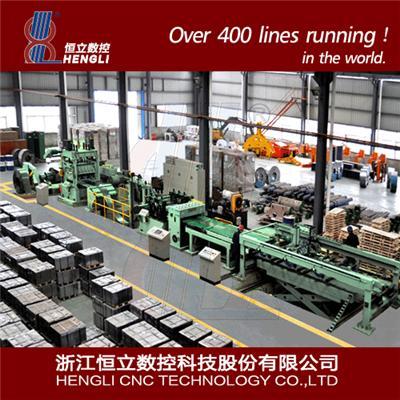
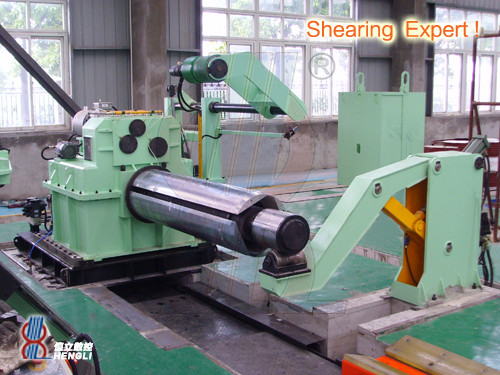
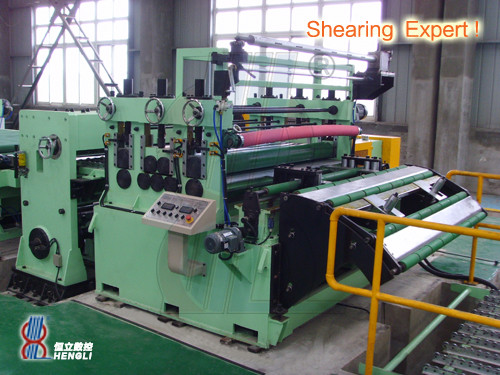
Flying Shear Lines: High-Speed Continuous Processing
Flying shear lines represent the pinnacle of CTL technology, designed for continuous operation at high line speeds. In a flying shear line, the shear carriage moves along the material path at the same speed as the strip during the cutting cycle, eliminating the need to stop the line for each cut. This synchronous motion dramatically increases throughput while maintaining tight length tolerances.
Modern flying shear lines are equipped with servo-driven shear carriages, advanced CNC controls, and integrated stacker systems that automatically sort and stack finished sheets. These lines can operate at speeds exceeding 100 m/min while cutting sheets with length accuracies of ±0.5 mm.
The flying shear mechanism itself comes in several configurations:
- Rotary drum shear — Two rotating drums with mounted blades that cut on the fly, ideal for light to medium gauges at high speeds.
- Crank-driven shear — Uses a crank mechanism to drive the upper blade through the material, suitable for medium to heavy gauges.
- Hydraulic swing shear — Employs hydraulic cylinders for the cutting stroke, offering flexibility across a wide thickness range.
Flying shear lines are the preferred solution for steel service centers handling high-volume orders where maximum productivity and minimum cycle time are critical business drivers.
Blanking Lines: Ready-to-Press Blanks
Blanking lines take coil processing one step further by producing finished blanks that are ready for immediate use in stamping presses. These lines combine the shearing capability of CTL lines with additional operations such as edge trimming, notching, punching, and stack sorting. Blanking lines are extensively used in the automotive industry to produce body panel blanks, chassis components, and structural reinforcements.
Advanced blanking lines often incorporate:
- In-line inspection systems — Vision-based pinhole detectors and surface defect scanners ensure quality before blanking.
- Automatic stacking and sorting — Finished blanks are automatically stacked, counted, and sorted by grade with magnetic or vacuum handling systems.
- Oil and lubrication stations — Apply precisely controlled lubricant films to blanks for optimal stamping performance.
- Custom blanking dies — Produce complex nested shapes that maximize material utilization.
By delivering finished blanks rather than standard sheets, blanking lines help stamping plants eliminate in-house shearing operations, reduce material handling costs, and improve overall production efficiency. Just-in-time blanking has become a key strategy for automotive tier suppliers seeking to minimize inventory costs.
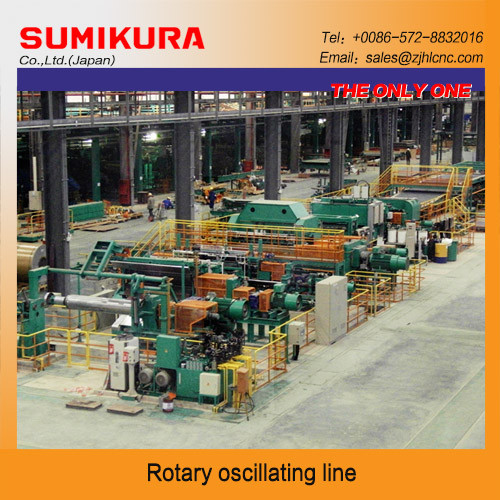
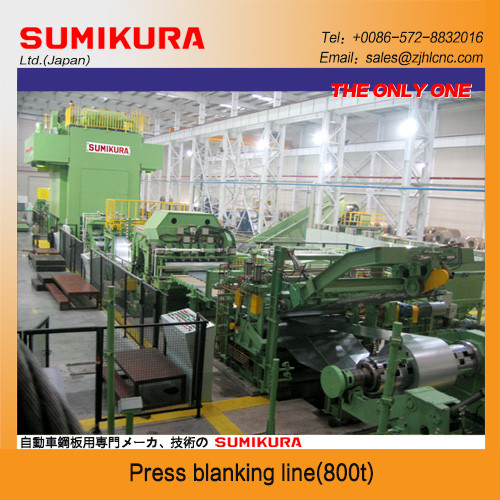
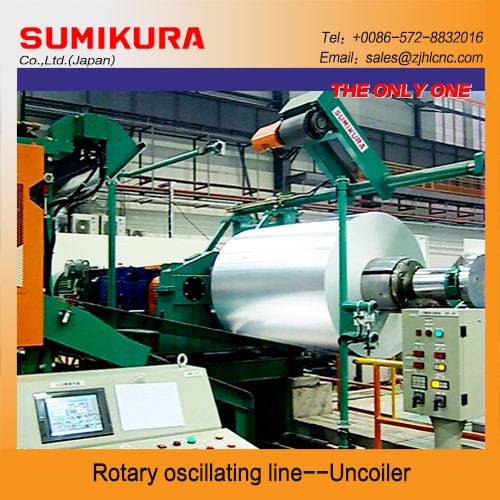
Press Feed Lines: Integrated Coil-to-Press Solutions
Press feed lines are specialized coil processing systems designed to feed precisely positioned strip material directly into a stamping or forming press. These lines integrate coil loading, leveling, edge guiding, and feed mechanisms into a single synchronized system that operates in lockstep with the press cycle. Press feed lines eliminate the need for intermediate sheet handling and significantly improve press utilization rates.
Key components of a modern press feed line include a hydraulic uncoiler with expansion mandrel, a servo-driven straightening feed mechanism, an edge guide control system for maintaining strip alignment, and a loop control system that maintains optimal strip tension between the decoiler and the press. Advanced press feed lines can operate at feed lengths of up to 6,000 mm with positional accuracy of ±0.15 mm at speeds exceeding 200 strokes per minute.
Choosing the Right Coil Processing Line
Selecting the appropriate coil processing line depends on several factors that align with your business model, material portfolio, and customer requirements. The following considerations should guide your evaluation:
| Line Type | Primary Output | Optimal Thickness | Best For |
|---|---|---|---|
| Slitting Line | Narrow coils | 0.15 to 12 mm | Multiple width outputs from one master coil |
| Cut-to-Length Line | Flat sheets / plates | 0.3 to 25 mm | Precision sheet dimensions with superior flatness |
| Flying Shear Line | High-volume sheets | 0.3 to 16 mm | Maximum throughput for standard sheet sizes |
| Blanking Line | Finished press blanks | 0.5 to 8 mm | Ready-to-stamp blanks with nested shapes |
| Press Feed Line | Strip to press | 0.3 to 6 mm | Integrated coil-to-stamping operations |
In addition to output type, factors such as production volume, material variety, changeover frequency, available floor space, and investment budget all play significant roles in determining the optimal line configuration. Steel service centers handling diverse customer orders typically benefit from flexible slitting and combination CTL lines, while dedicated manufacturing plants often prefer specialized high-speed lines optimized for their specific product range.
Why Coil Processing Line Quality Matters
The quality of your coil processing line directly impacts the quality of your finished products. A well-designed line with precision engineered components delivers consistent dimensional accuracy, superior flatness, and defect-free surfaces that meet the most demanding customer specifications. Conversely, a poorly designed or outdated line can result in edge burrs, crossbow defects, camber issues, and surface scratches that lead to customer rejections and costly rework.
Modern coil processing lines from established manufacturers incorporate robust machine frames with pre-stressed construction, precision-ground work rolls with advanced bearing systems, servo-driven feed and cut mechanisms for micron-level accuracy, and integrated PLC-based control systems with recipe management for repeatable setup. These features translate directly into higher productivity, lower scrap rates, and improved profitability for the operator.
Industry Applications Overview
Metal coil processing lines serve a remarkably diverse range of industries. In the construction sector, cut-to-length lines produce roofing sheets, wall cladding, purlins, and structural decking. The automotive industry relies on blanking and press feed lines for body panels, chassis components, and safety-critical structural parts. Appliance manufacturers use precisely slit strip for refrigerator panels, washing machine drums, and HVAC components. The energy sector demands heavy-gauge plate processing for wind turbine towers, pipeline components, and transformer housings. Each application imposes unique requirements on flatness tolerance, edge quality, dimensional accuracy, and surface finish — requirements that can only be met through properly configured coil processing equipment.

Summary
Metal coil processing lines are essential equipment for steel service centers and metal fabricators seeking to convert master coils into value-added finished products. From slitting lines that divide coils into multiple narrow strips, to cut-to-length lines producing precision flat sheets, to high-speed flying shear lines, blanking lines, and integrated press feed systems — each line type serves a distinct market segment with specific performance characteristics.
Understanding the differences between these processing line types, their respective strengths, and their optimal application scenarios is the first step toward selecting the right equipment for your operation. By matching line capabilities to your customer requirements and production goals, you can achieve the throughput, quality, and flexibility needed to compete effectively in today's demanding metal processing market.
For more detailed information about specific coil processing line configurations, technical specifications, or custom engineering solutions, please explore our product pages or browse related articles on our blog.