
What Is a Flying Shear Line and How Does It Improve Production Efficiency?
What Is a Flying Shear Line?
A flying shear line is an advanced metal coil processing system designed to cut moving material without stopping the production line. Unlike conventional shearing methods that require the coil to halt before cutting — causing downtime and reducing throughput — a flying shear synchronizes its cutting motion with the material's travel speed. This enables continuous, high-speed operation that significantly improves overall production efficiency.
In the metal processing industry, flying shear technology has become the gold standard for applications requiring precision cut-to-length sheets from coiled stock. The technology is widely used in steel service centers, automotive manufacturing, home appliance production, and general metal fabrication.
How Does a Flying Shear Work?
The core principle of a flying shear is simple yet highly engineered: the shear blade moves in parallel with the advancing metal strip during the cutting stroke. This synchronization means the material never needs to pause, allowing the production line to maintain its set speed throughout the entire cutting cycle.
Continuous Material Feed
Uncoiled metal strip travels through the leveling and feeding system at a constant speed, typically between 40–70 m/min depending on material thickness and line configuration.
Precision Length Measurement
An encoder-based measuring system continuously tracks material travel distance and signals the shear mechanism to initiate the cut at precisely the right moment.
Synchronous Cutting Action
The flying shear carriage accelerates to match the material speed. The cutting blades close and execute the shear while both the material and carriage are moving together, producing a clean, burr-free edge.
Carriage Return
After completing the cut, the shear carriage releases and returns to its home position, ready for the next cycle — all while the material continues flowing uninterrupted.
Key Components of a Flying Shear Line
A complete flying shear line integrates several critical subsystems working in precise coordination:
- Uncoiler and Coil Car: Holds and feeds the metal coil with controlled tension and expansion.
- Flattener and Leveler: Removes coil curvature and internal stress to ensure flat, dimensionally stable strip material.
- Feed and Measuring System: Precision encoder and servo-driven pinch rolls control material feed with high accuracy.
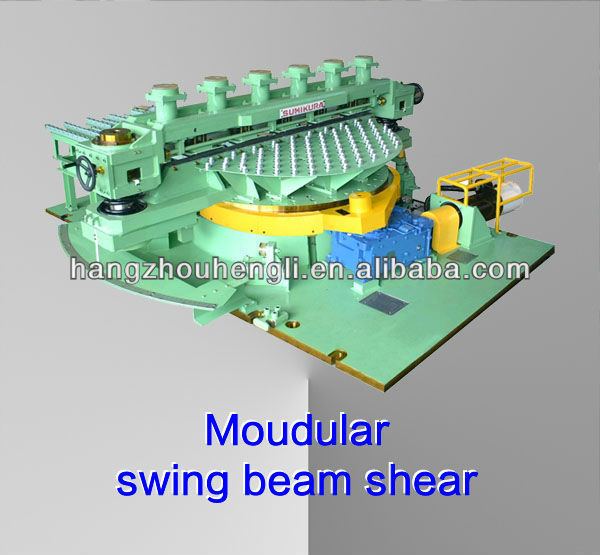
- Flying Shear Mechanism: The core unit — available in rotary shear, swing shear, and stop-start shear configurations depending on speed and thickness requirements.
- Runout Conveyor and Stacker: Receives cut sheets and stacks them automatically for downstream handling or packaging.
- PLC Control System: Centralized automation that coordinates all line functions, stores cutting programs, and supports recipe-based production.
Flying Shear vs. Conventional Shearing: A Comparative Analysis
To understand the efficiency gains of flying shear technology, it helps to compare it directly with traditional stop-start shearing methods used in conventional cut-to-length lines.
| Parameter | Flying Shear Line | Conventional (Stop-Start) Shear |
|---|---|---|
| Line Speed | 40–70 m/min continuous | 20–40 m/min (intermittent) |
| Cutting Precision | ±0.3–0.5 mm | ±0.5–1.0 mm |
| Cycle Time | No interruption between cuts | 200–500 ms dwell per cut |
| Throughput (8h shift) | Up to 30–50% higher | Baseline |
| Operator Intervention | Minimal (PLC automated) | Moderate (manual adjustments) |
| Material Waste | Lower (consistent precision) | Higher (tolerance accumulation) |
| Edge Quality | Clean, minimal burr | Moderate burr, more secondary processing |
| Energy Consumption per Sheet | Lower (continuous operation) | Higher (frequent acceleration/deceleration) |
The data clearly shows that flying shear technology delivers measurable advantages in every key performance indicator, making it the preferred choice for modern metal processing facilities seeking to maximize output while maintaining quality.
Flying Shear Line Products from Hengli
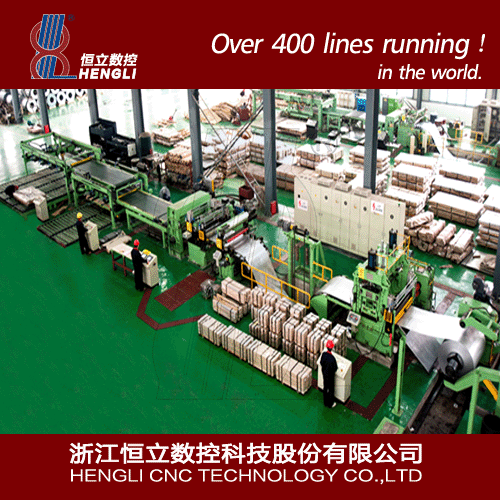
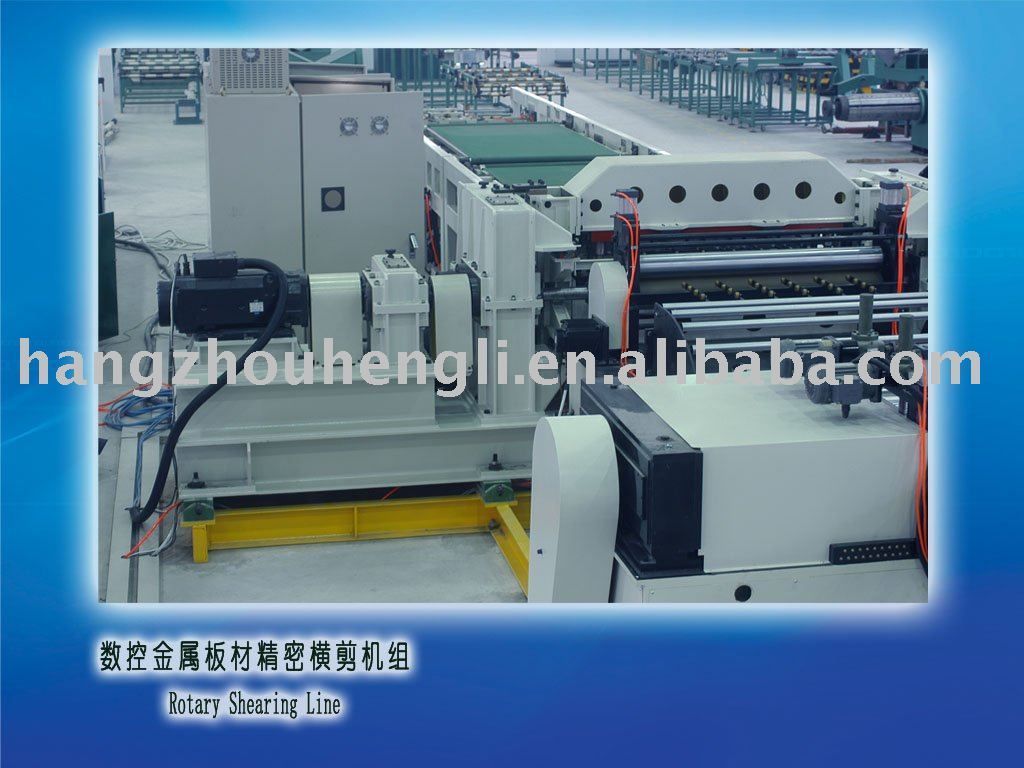
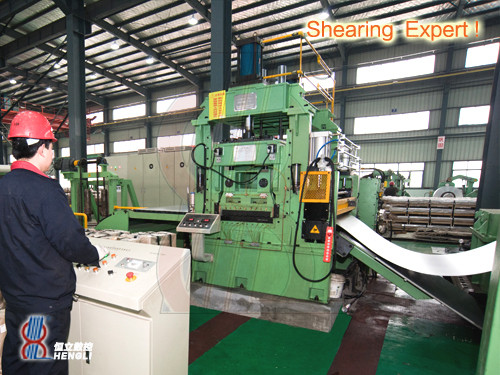
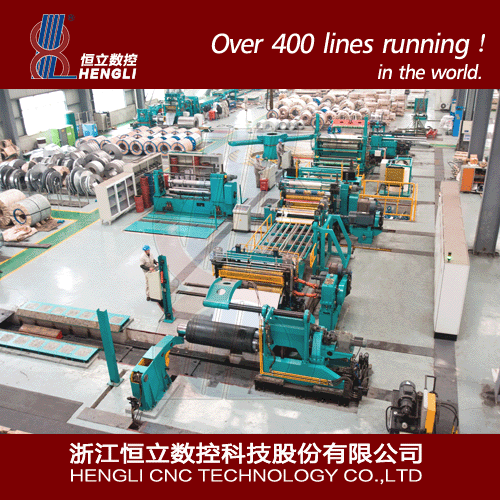
Hengli offers a comprehensive range of flying shear lines and rotary shearing solutions designed for various material types, thickness ranges, and production speed requirements. These systems are engineered for reliability, precision, and long service life in demanding industrial environments.
Cut-to-Length Lines with Flying Shear Technology
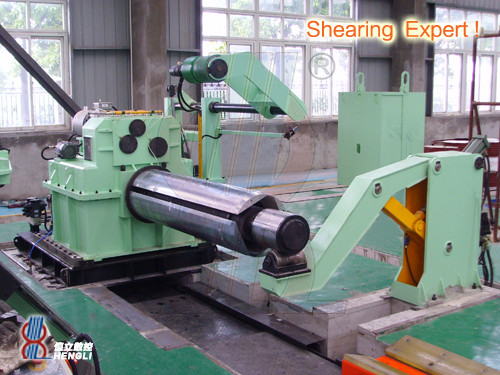
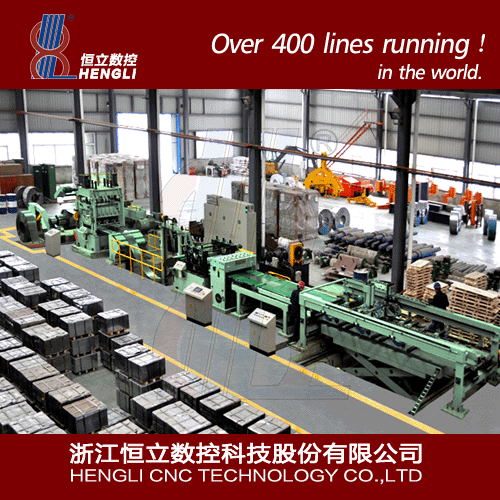
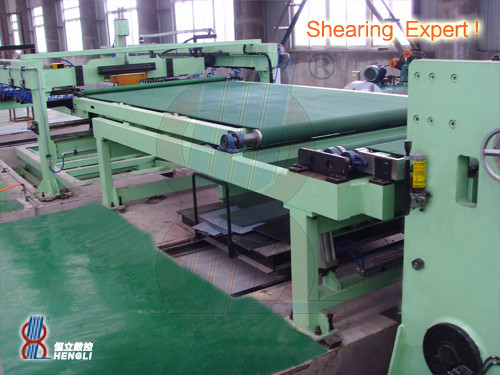
Hengli's cut-to-length lines integrate flying shear capability for high-speed, high-precision sheet production. These systems handle a wide range of materials including cold-rolled steel, galvanized steel, stainless steel, and aluminum, with thickness capacities from 0.2 mm to over 12 mm depending on the model.
Silicon Steel and Transformer Lamination Cutting Lines
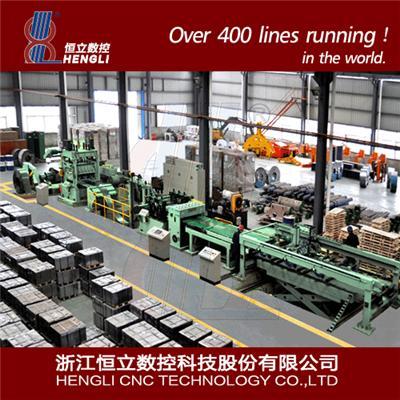
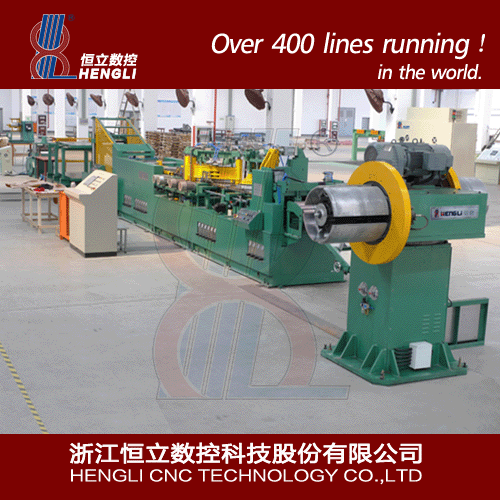
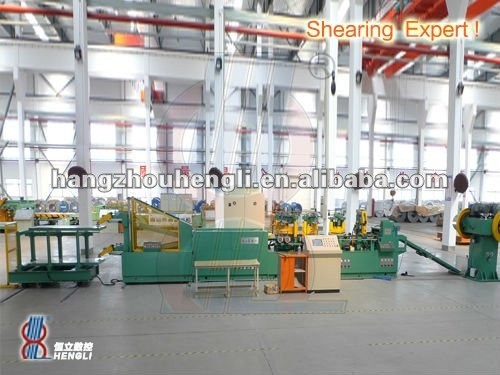
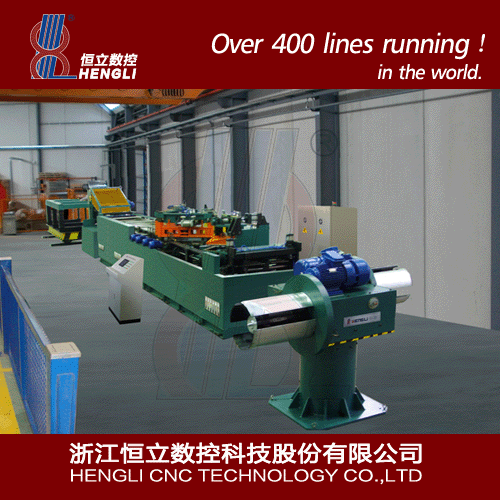
For electrical steel applications such as transformer core laminations, flying shear technology delivers the precise dimensional accuracy and clean edge quality required for efficient magnetic core assembly. Hengli's silicon steel cut-to-length lines are purpose-built for this demanding application, offering tight tolerance control and high-speed operation.
Specialized Cutting Lines for Tinplate, Aluminum, and Scroll Cutting
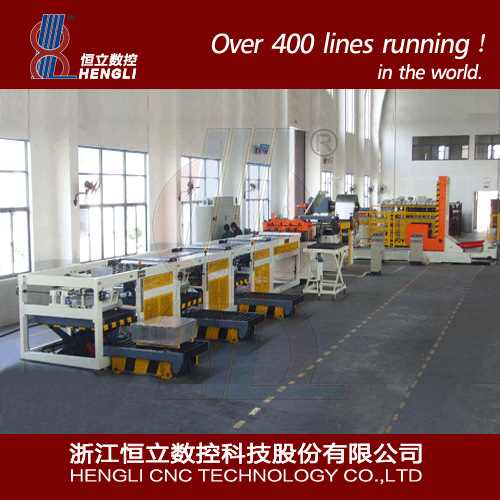
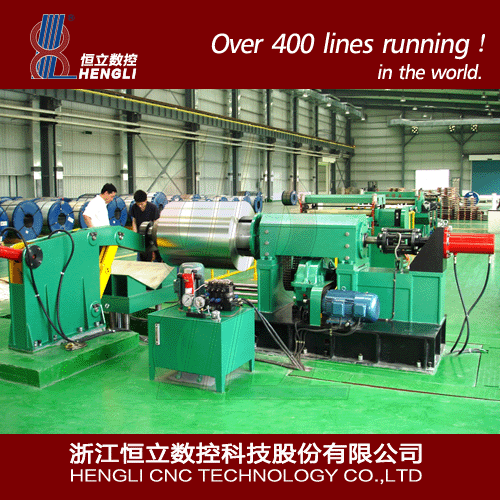
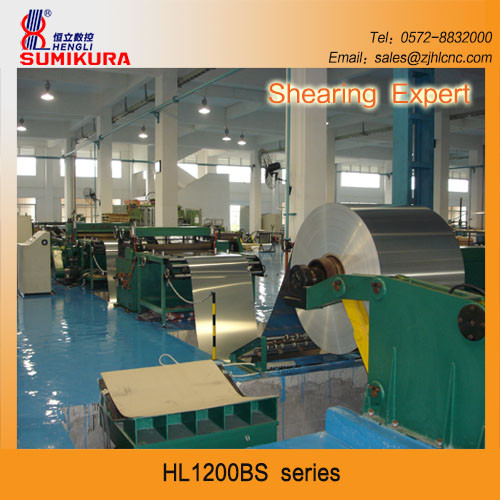
Beyond standard steel processing, Hengli offers specialized flying shear and rotary cutting solutions for tinplate, aluminum, and scroll-cutting applications. These systems are optimized for thinner-gauge materials and deliver the precision needed for can-making, food packaging, and aluminum fabrication industries.
Integrated Slitting and Shearing Solutions
For facilities requiring both slitting and cut-to-length capabilities, Hengli's combined cutting lines integrate flying shear technology with slitting functionality in a single pass. This reduces handling, floor space requirements, and capital investment while maintaining the high throughput and precision that flying shear technology enables.
Advantages of Flying Shear Technology for Production Efficiency
Implementing a flying shear line delivers measurable operational improvements that directly impact the bottom line:
30–50% Higher Throughput
Eliminating stop-start cycles means the line produces more sheets per hour, directly increasing daily output without requiring additional floor space or labor.
Superior Dimensional Accuracy
Flying shear systems maintain length tolerances of ±0.3–0.5 mm, reducing scrap rates and improving downstream assembly quality.
Reduced Labor Requirements
Fully automated PLC control with recipe management means one operator can oversee multiple lines, lowering labor costs and minimizing human error.
Lower Energy Consumption per Sheet
Continuous operation avoids the energy spikes associated with frequent motor start-stop cycles, reducing overall power consumption.
Faster Changeover Between Recipes
PLC-stored cutting programs allow quick switching between sheet lengths and quantities, enabling flexible, just-in-time production.
Applications of Flying Shear Lines
Flying shear technology is deployed across a wide range of industries where metal sheet processing is a critical step:
- Steel Service Centers: Processing coils into custom-length sheets for distribution to manufacturers and fabricators.
- Automotive Manufacturing: Producing body panels, chassis components, and structural parts from steel and aluminum coils.
- Home Appliance Production: Cutting sheet metal for refrigerator panels, washing machine drums, air conditioner housings, and more.
- Electrical Equipment: Precision cutting of silicon steel for transformer laminations, motor cores, and generator stators.
- Construction Materials: Producing roofing sheets, wall cladding, and structural members from coated steel coils.
- Food Packaging: Cutting tinplate and aluminum coils for can bodies, ends, and food container components.
Conclusion
Flying shear line technology represents a significant leap forward in metal coil processing efficiency. By enabling continuous, high-speed cutting without material stop-start interruptions, it delivers 30–50% higher throughput, tighter dimensional tolerances, reduced labor requirements, and lower per-sheet energy consumption compared to conventional shearing methods.
For metal processors looking to modernize their operations and stay competitive, investing in a flying shear line is a proven path to improved productivity, quality, and profitability. Hengli offers a comprehensive range of flying shear and rotary shearing solutions backed by decades of engineering expertise and hundreds of successful installations worldwide.
To learn more about how a flying shear line can transform your production, contact our team for a consultation and customized proposal tailored to your specific material requirements and production goals.