
High-Speed Cut to Length Lines: Maximizing Throughput for Steel Service Centers
High-Speed Cut to Length Lines: The Throughput Engine for Steel Service Centers
Steel service centers operate in one of the most margin-sensitive corners of the metals supply chain. They buy coil in volume, add value through processing, and sell sheet and plate on tight delivery windows. In this business, throughput is the difference between turning inventory four times a year or eight, between quoting a two-week lead time or a two-day one, and between being a preferred supplier or an occasional backup. High-speed cut to length lines have become the primary tool service centers use to close that gap, converting raw coil into finished blanks at speeds that were unthinkable a generation ago.
This article examines how high-speed cut to length lines help steel service centers maximize throughput, shorten lead times, and improve customer satisfaction. We look at the machines behind each stage of the line, from precision leveling to flying shear cutting and automatic stacking, and show how each technology contributes to a faster, more predictable processing floor.
Why Throughput Defines a Steel Service Center's Success
Unlike mills, which run long production campaigns, service centers live on responsiveness. Customers order from a service center because it can deliver the right flatness, the right length tolerance, and the right quantity at the right time. Every hour a coil sits waiting for processing is working capital frozen in inventory, and every day added to the quoted lead time is an invitation for the customer to call a competitor.
Throughput improvements flow directly into the three numbers that matter most:
- Inventory turns. Faster processing moves coils into finished-goods racks sooner, freeing cash for the next purchase.
- Order-to-delivery time. A high-speed line lets a center accept orders later in the day and still ship on schedule, which becomes a powerful sales argument.
- Yield and consistency. Servo-precision cutting means fewer scrapped blanks and fewer dimensional complaints.
The Throughput Math That Matters
Raising line speed from 40 to 80 m/min does not just halve cycle time. It changes the economics of the whole facility: the same footprint, crew, and coil inventory can serve roughly twice the order volume, meaning more revenue per square meter of warehouse and a faster return on the equipment investment.
None of this is possible with stop-and-start shearing. It requires a coordinated line where the strip never stops moving during the cut, which is exactly what modern high-speed cut to length technology delivers.
Anatomy of a High-Speed Cut to Length Line
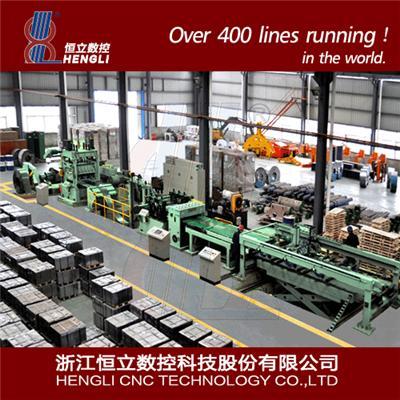
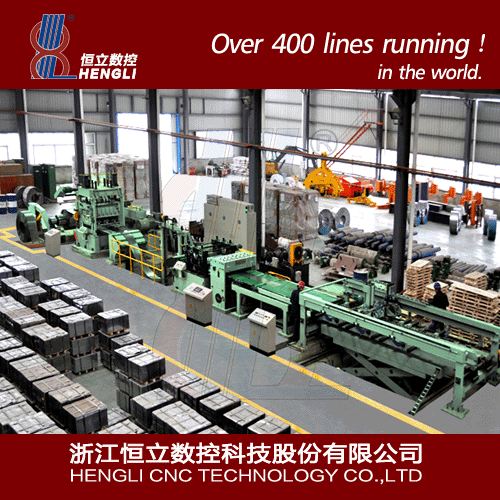
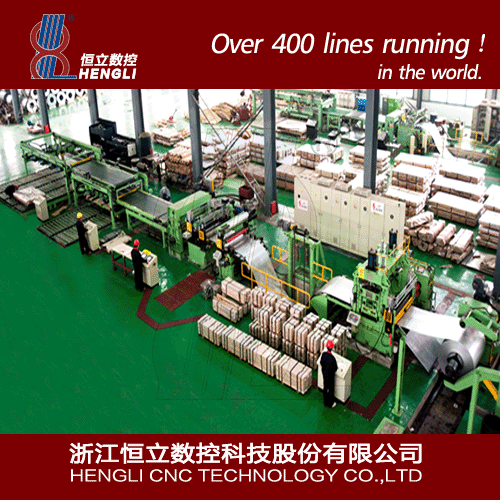
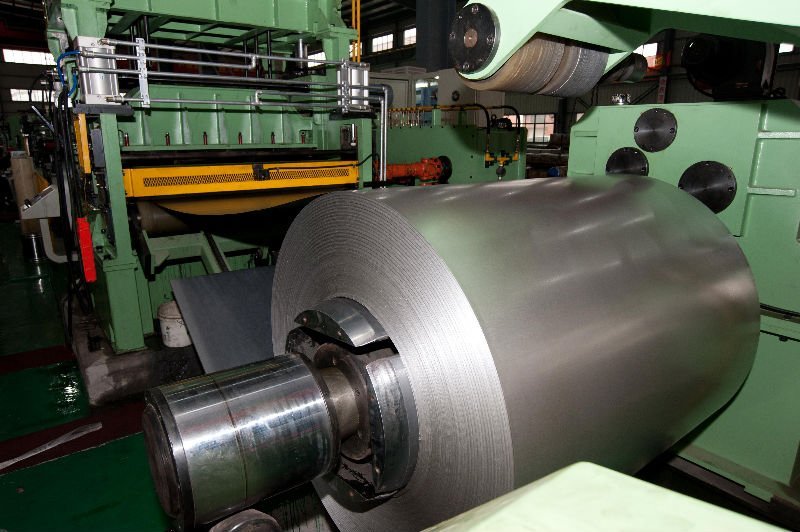
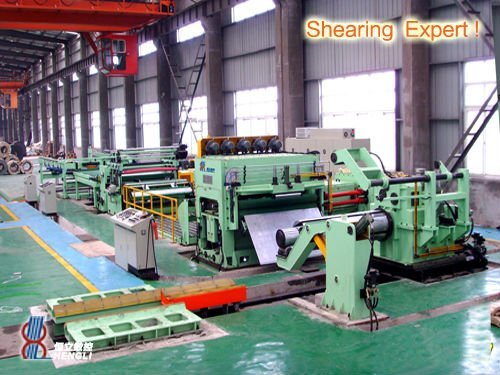
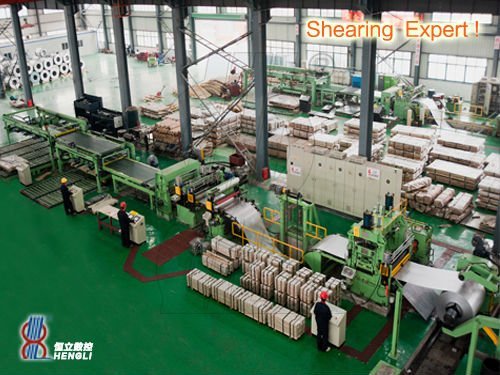
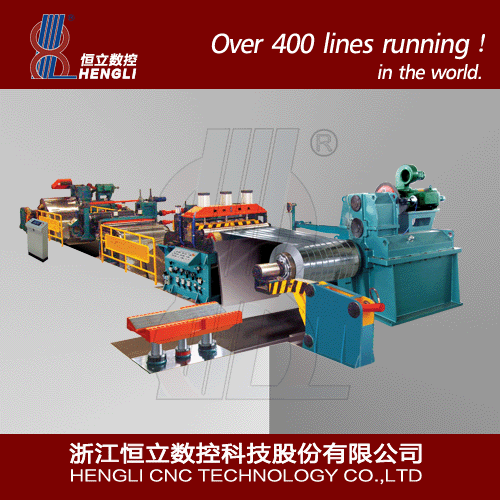
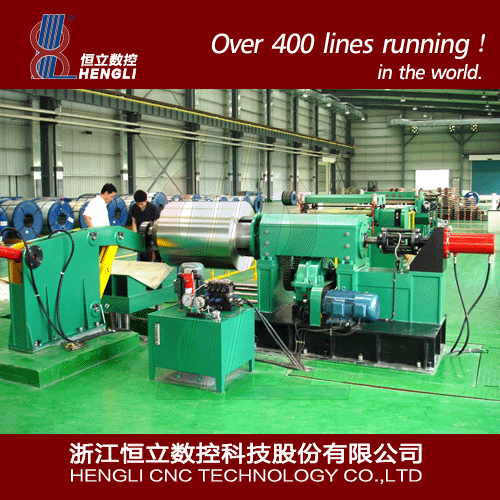
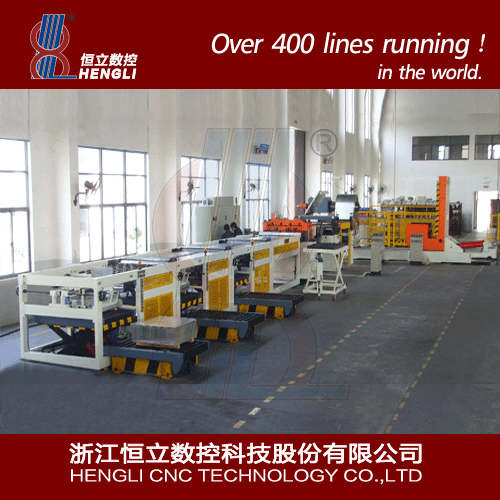
A high-speed cut to length line is a system, not a single machine. The coil enters through an uncoiler and peeler, passes through a precision leveler that removes coil set and shape defects, then travels through a servo-driven measuring and feeding system into a flying shear that cuts on the move. Behind the shear, a belt conveyor and automatic stacker organize blanks into neat stacks ready for banding and shipment. Every station must keep pace with every other, because the line is only as fast as its slowest component.
Hengli's cut to length line family is engineered around this system approach. The HJL series covers material thicknesses from 0.2 mm to 3.0 mm across widths from 650 mm to 1850 mm, with configurations tuned for cold rolled steel, stainless steel, and coated materials. Lines can be specified with digital-controlled rotary shears for the highest speed applications, or with conventional stop-and-cut shears for maximum flexibility on short runs. The goal is always the same: keep the strip moving and keep the blanks coming.
Servo Feeding and Flying Shear: Where the Speed Actually Happens
The single biggest bottleneck in traditional cut to length lines is the shear. A conventional shear stops the strip, cuts, and restarts, so the line accelerates and decelerates for every single blank. At high production rates this stop-and-go rhythm wastes time and limits the line to roughly 20 to 40 cuts per minute regardless of how fast the leveler can run.
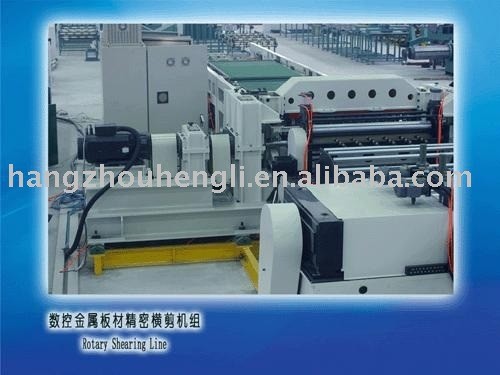
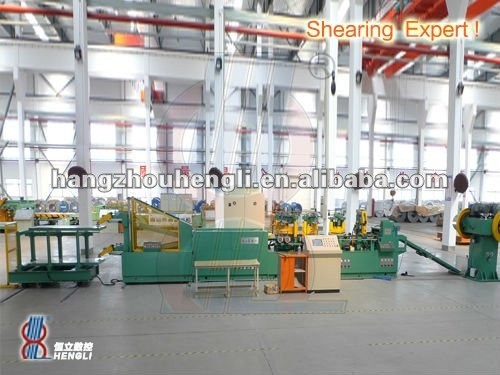
Flying shear and rotary shear technology removes that bottleneck. The strip travels continuously while the shear head matches strip speed, cuts, and returns for the next cycle. A servo-driven measuring system tracks the strip in real time, so cut length accuracy is maintained even at full speed. The result is hundreds of accurate blanks per hour with clean, burr-free edges. Digital-controlled rotary cutting lines coordinate the shear, leveler, and stacker through a single control system: operators set length and quantity from a touchscreen, and changeover between sizes becomes a matter of entering new parameters rather than mechanically resetting stops.
Precision Leveling: The Foundation of Consistent Output
Speed is useless if the output is not flat. Coil arrives with coil set, edge wave, and center buckle inherited from the rolling and coiling process. A service center that ships wavy blanks pays twice: once in scrapped material and once in lost customer trust. The leveler is therefore the quality gate of the entire line, and it must do its job at line speed, not as a separate slow operation.
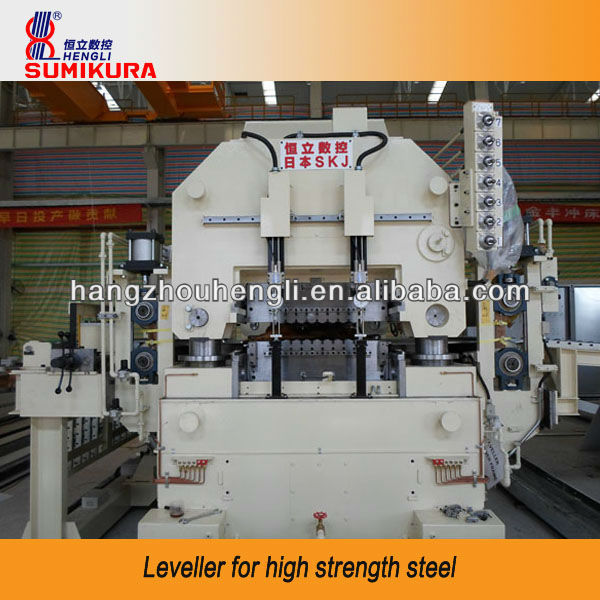
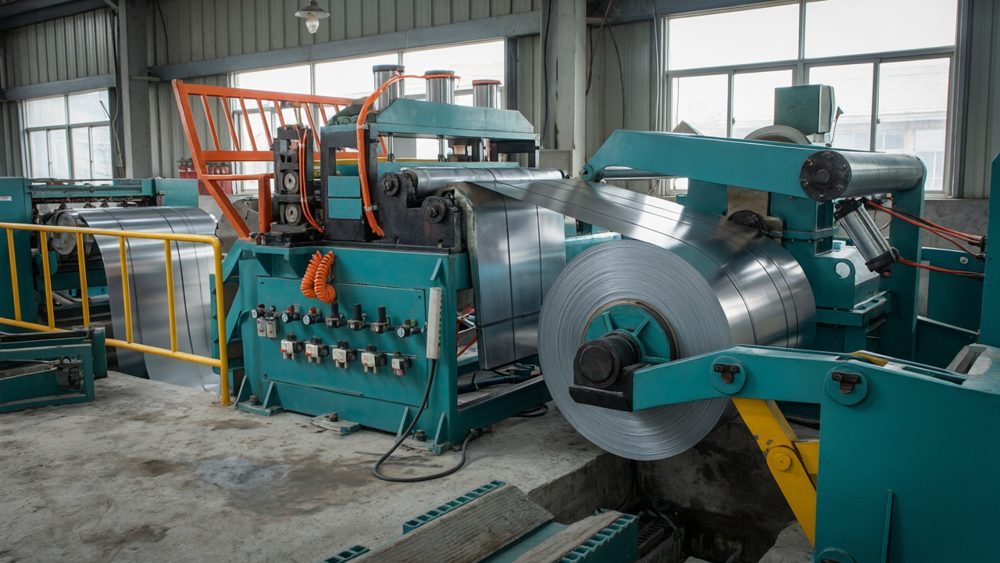
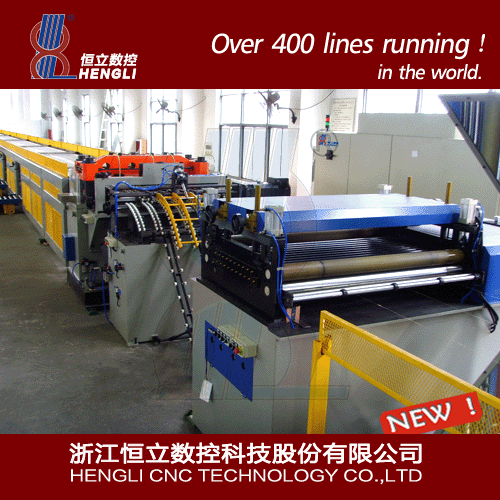
Precision levelers use multiple small-diameter work rolls arranged in an alternating pattern to bend the strip progressively in both directions, flattening it through controlled plastic deformation. High-strength steel and aluminum demand more roll stand force and smaller roll diameters to achieve the same flatness. Choosing the right leveler capacity is therefore one of the most important decisions in configuring a high-speed line.
Pairing Cut to Length with Slitting: A Complete Processing Hub
Most service centers do not process only sheet. Customers also order slit coil, narrow strip, and blanks in non-standard widths. A facility that runs both a slitting line and a high-speed cut to length line can serve the full spectrum of demand, leveling utilization across the two lines and giving sales a complete processing story to sell.
Modern slitting lines complement cut to length operations in another way: they can pre-split wide coil into master widths that feed the cut to length line more efficiently, and they can produce finished strip for customers who need coil rather than sheet. When both lines share material handling equipment and crew skill sets, the marginal cost of processing a new order drops.
Specialized High-Speed Lines: Scroll Cutting for Tinplate and Aluminum
Some of the highest-value work in a service center is not rectangular sheet at all. Appliance manufacturers, radiator producers, and packaging companies buy scroll-cut blanks, sheets cut to a nested pattern that minimizes scrap when the customer stamps out round or shaped parts. Scroll cutting lines turn this niche into a profitable product line, and high-speed versions do it at production rates that make the economics attractive.
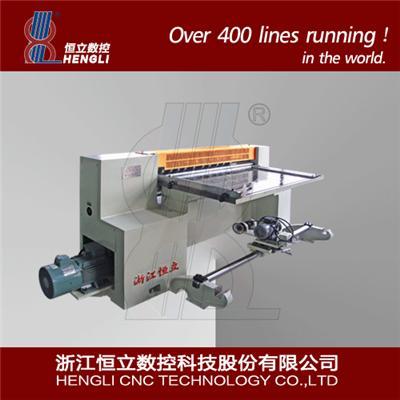
Scroll cutting lines level the strip, cut it into scroll patterns with a dedicated die or rotary shear, and stack the nested blanks automatically. For tinplate and aluminum, the line must handle softer, thinner material without surface marking, which places special demands on the leveler and conveyor system. Centers that serve the appliance and packaging industries find that adding scroll cutting capability deepens customer relationships, because it moves the center from selling commodity sheet to selling engineered blanks.
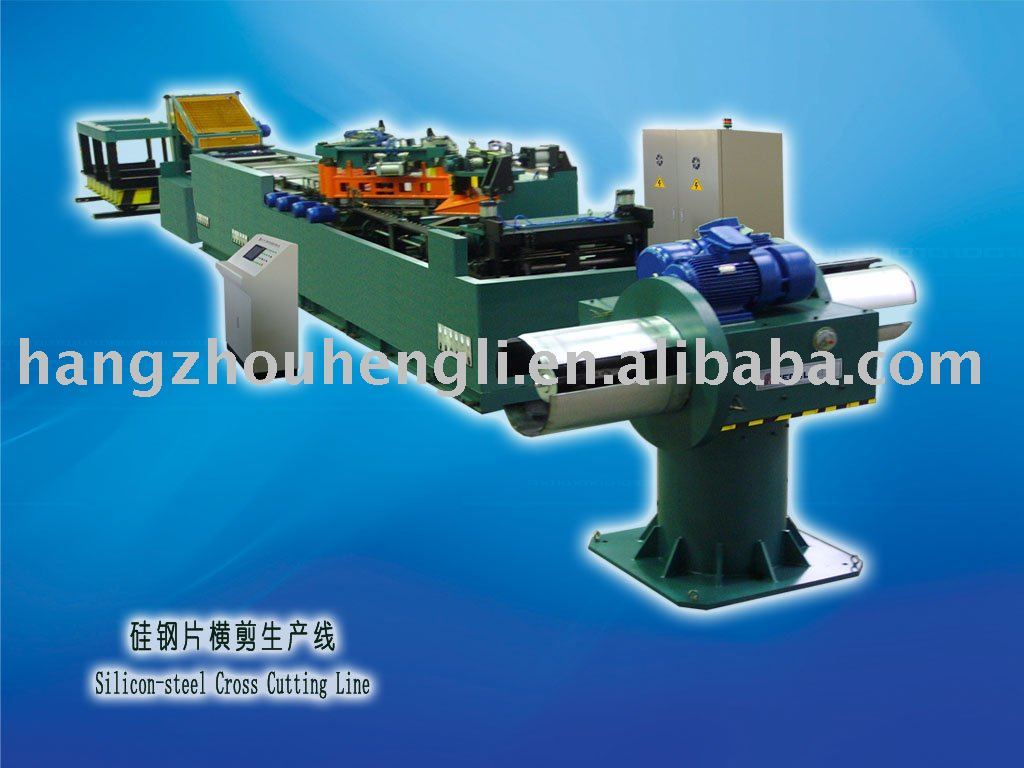
Serving Niche Markets: Silicon Steel Cut to Length for Transformer Laminations
Electrical steel is a different world. Grain-oriented silicon steel is expensive, brittle along certain axes, and unforgiving of burrs and rough edges, because every imperfection becomes a loss in the transformer core. Service centers that process silicon steel for transformer manufacturers need lines designed specifically for the material: gentle handling, precise shear clearances, and stacking systems that protect the coating.
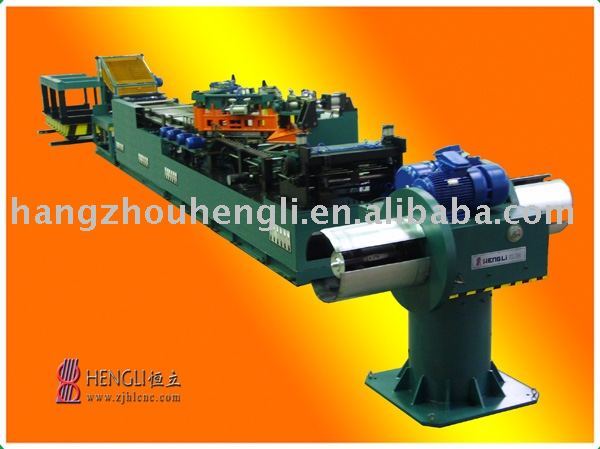
Hengli's silicon steel cut to length lines process transformer lamination strip and transformer core production in a single pass, combining the same high-speed architecture with material-specific tooling. The lesson for service centers is broader than the niche itself: when you serve a specialized market, specialized line configurations become a competitive moat that competitors cannot easily replicate.
Choosing the Right Line Configuration
There is no single correct cut to length line; there is only the correct line for a center's product mix, volume profile, and quality commitments. The comparison below summarizes the main configuration choices:
| Configuration | Best For | Throughput Profile | Typical Materials |
|---|---|---|---|
| Stop-and-cut line | Short runs, many sizes, maximum flexibility | Moderate, size-change friendly | Mild steel, coated sheet |
| Flying shear line | High-volume standard sheet production | High, continuous strip movement | Cold rolled, stainless steel |
| Rotary shearing line | Very high speed, precision length control | Highest, digital-controlled | CR, stainless, aluminum |
| Scroll cutting line | Nested blanks for stamping customers | High, pattern-specific | Tinplate, aluminum |
| Silicon steel line | Transformer lamination and core production | High, material-specific tooling | Grain-oriented silicon steel |
When evaluating suppliers, look beyond the headline speed number. Ask about the complete line: leveler capacity at the rated speed, shear life and maintenance intervals, stacker reliability, and the control system's ability to handle quick changeovers. The best line is the one that runs at rated speed all day, every day, not the one that peaks on the acceptance test.
Closing Summary: Speed Becomes a Business Advantage
For a steel service center, a high-speed cut to length line is not a machine purchase; it is a strategic decision about how the business competes. Faster processing raises inventory turns, shortens quoted lead times, and lets the sales team promise what the plant can actually deliver. Precision leveling and flying shear cutting protect quality at speed, while automatic stacking removes the most repetitive and injury-prone labor from the floor.
Every hour of throughput gained compounds across the year. Centers that invest in coordinated, high-speed processing capacity position themselves as the reliable source in their region. Browse the full range of cut to length and shearing solutions, or contact us to discuss a line configuration matched to your product mix and volume targets.