
Heavy Duty Slitting Lines for Hot Rolled Coil: Design Considerations
Hot rolled coil (HRC) is the workhorse feedstock of the steel industry, feeding pipe and tube mills, structural fabricators, heavy stamping shops and service centers. Slitting it, however, is a different discipline from cutting thin cold rolled or silicon steel. Gauges of 6 to 25 mm, yield strengths that frequently exceed 500 MPa, a tenacious mill scale layer, and coil weights of 6 to 25 tonnes all push the line to its mechanical limits. This article explains the design considerations that separate a genuine heavy duty slitting line from a light-gauge machine, covering coil handling, slitter head design, frame stiffness, drive sizing, tension control and the auxiliary systems that keep the line running in a steel mill or coil processing center environment.
Coil Handling and Uncoiling for Heavy Coils
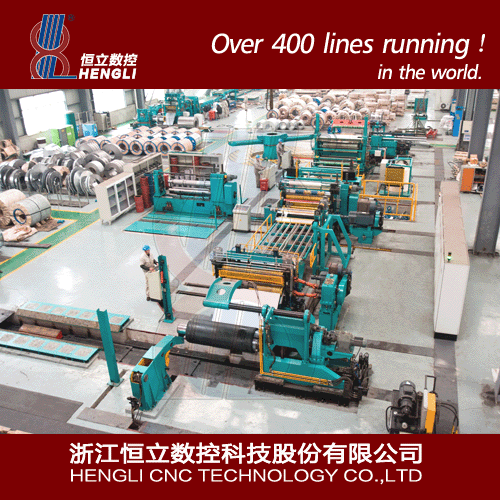
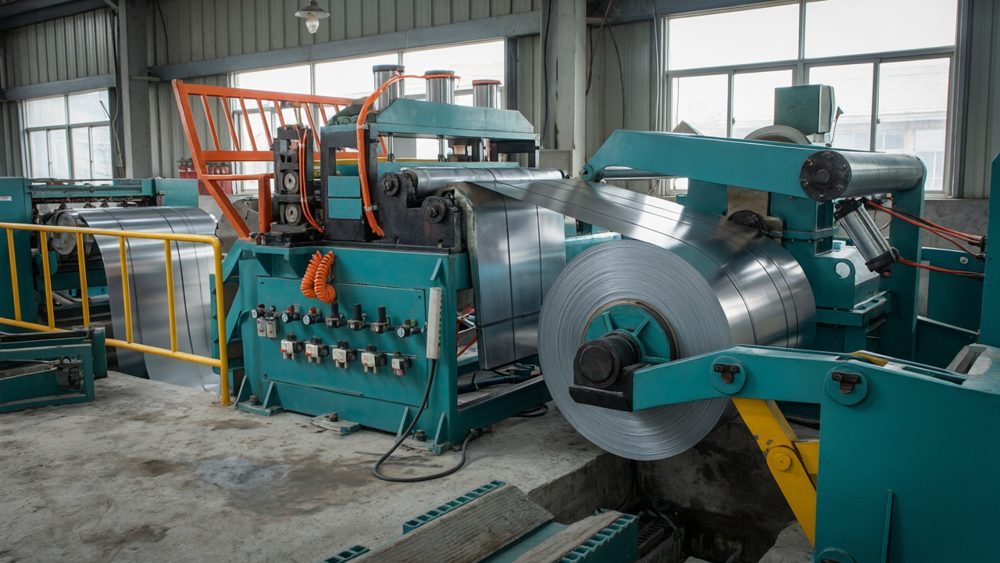
The first design decision is the uncoiler and its feeding equipment. A heavy duty line must accept coils that light lines never see: outer diameters up to 2000 mm, inner diameters of 508 to 610 mm, widths from 600 to 1850 mm, and coil weights from 6 to 25 tonnes or more. The uncoiler mandrel must be hydraulically expandable to grip the coil ID firmly without marking the bore, and the mandrel and its bearings must be sized for the full coil weight plus the bending loads of the strip as it is peeled off.
Around the uncoiler, a coil car positions and centers the coil, a peeler and pinch rolls feed the strip into the line, and an entry shear cuts off coil-end damage and welds before threading. For heavy gauge HRC, the peeler must generate enough force to separate the first wraps, and the pinch rolls must pull the strip without slipping on the scale surface. Edge centering and side guides are mandatory: a 20 mm strip wandering at 40 m/min can destroy the slitter knives within minutes.
Slitter Head Design: Arbors, Knives and Back-up Rolls
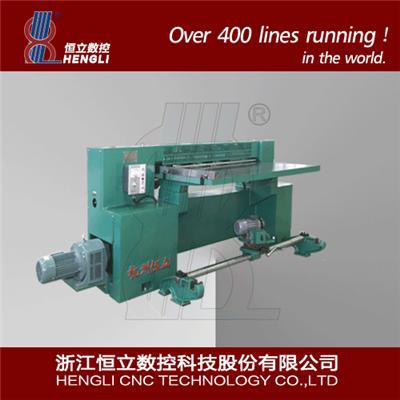
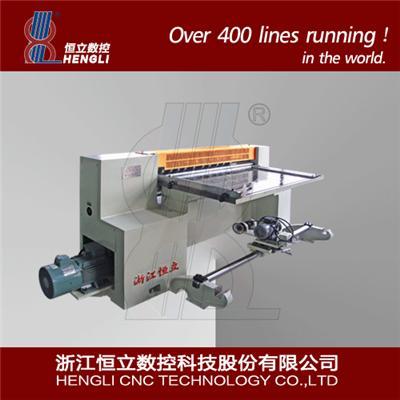
The slitter head is where heavy gauge earns its name. Slitting 12 mm HRC at high strength requires separating forces far beyond anything a thin-sheet line experiences, so the arbors (shafts) must be large in diameter, made of hardened alloy steel, and supported by back-up rolls along their working length. A slender arbor under a 100 tonne separating load deflects, the knives open up, and the strip develops burr, camber and width error.
Knife selection is equally critical. Carbide knives deliver the longest life and cleanest edge on abrasive, scale-covered HRC, while high-speed steel and alloy tool steel remain economical choices for lower volume work. Knife clearance, typically 8 to 12 percent of strip thickness for hot rolled material, must be set and maintained precisely; oversized clearance produces a rough fracture surface, and undersized clearance overloads the drive. A practical heavy duty line keeps knife runout under 0.01 mm, offers on-line or quick-change tooling, and pairs each slitter with a knife grinder so edge quality is consistent from coil to coil.
Frame Stiffness and Housing Design
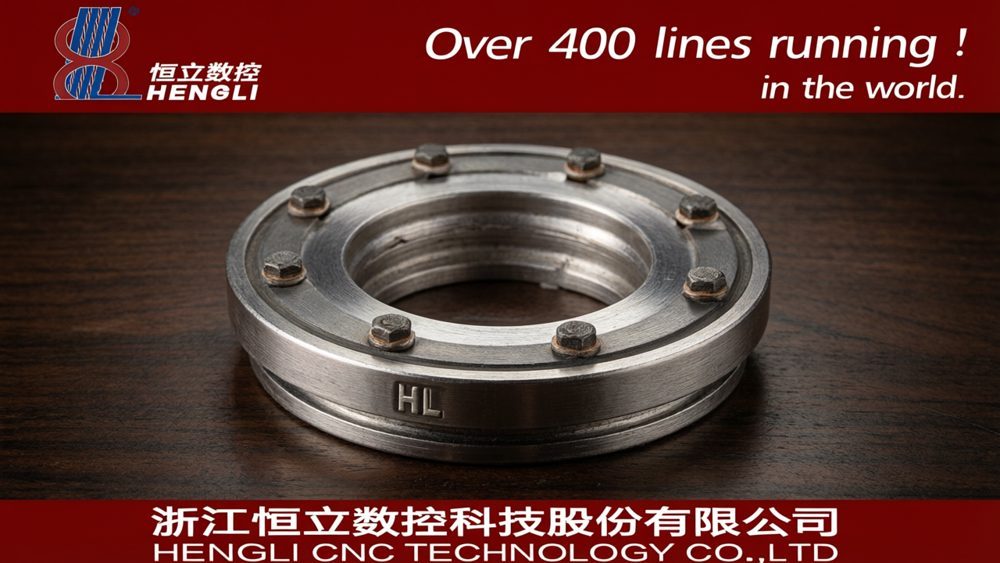
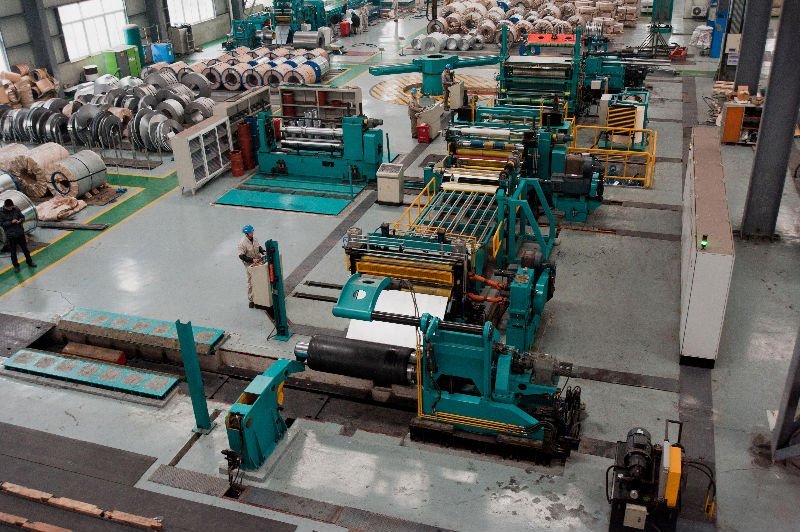
Frame rigidity determines whether the line holds tolerance under load. A heavy duty slitter is built around a massive housing, usually an O-frame or closed box-section structure, because an open C-frame deflects measurably under the separating forces of thick strip. The housing is welded from thick plate, stress-relieved to remove residual distortion, and precision-machined so the arbor bearing seats, guide ways and screw-down faces stay parallel for the life of the machine.
The frame also carries the gap-adjustment system, either mechanical screw-down with worm gearing or hydraulic cylinders with lock valves, and the strip guides that align material squarely into the knives. Foundation design matters too: a heavy line transmits significant dynamic load, and the housing should be bolted to a reinforced, leveled foundation with anchor points sized for the full separating force and coil weight.
Drive Sizing and Motor Power
Drive sizing starts with the physics of the cut. Slitting torque grows with strip thickness, strip width, tensile strength and the number of simultaneous cuts, so a line processing 6 to 25 mm HRC needs main drive power in the range of roughly 90 to 400 kW, several times what an equivalent-width thin-sheet line requires. The gearbox must provide high torque at low speed: heavy gauge is typically slit at 20 to 60 m/min, while the same machine family runs thin material at 90 to 120 m/min.
Modern heavy duty lines use AC vector drives with a wide constant-torque range, generous overload capacity for coil-end shearing and thread-up, and dynamic braking to stop a 25 tonne coil quickly in an emergency. The recoiler and tension system are separate drives that must be coordinated with the main drive through the line control system, otherwise the strip will snag, slip or buckle between stations.
Tension Control and Recoiling
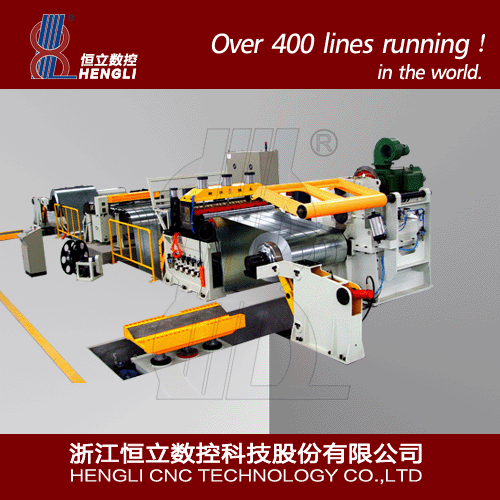
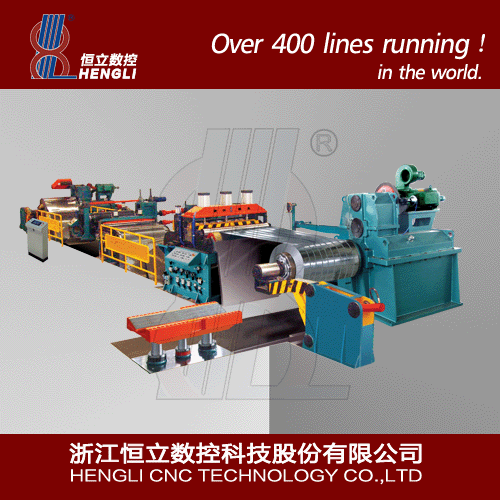
Heavy gauge HRC cannot simply be wound onto a small recoiler. The recoiler mandrel must be large and robust, typically with an overarm separator to support multiple slit coils and to keep them from telescoping as weight builds. Tension is generated either by the recoiler drive itself or by a drag-type tension unit with pinch rolls and brakes, and it must be regulated continuously: too little tension produces loose, telescoped coils; too much produces coil breaks and damaged edges. Load cells or dancer rolls feed tension feedback to the control system.
Because 6 to 25 mm strip is far too stiff to bend around small diameters, recoil IDs are generally 508 or 610 mm, and the recoiler must handle finished coil weights that can exceed the input coil weight once multiple slit strands are wound. A scrap winder collects the trimmed selvedge, and the edge trimmer, located before the slitter, keeps the strip width consistent for downstream operations.
Leveling, Edge Trimming and Auxiliary Systems
A complete heavy duty line includes more than the slitter itself. A multi-roll leveler with seven to nine work rolls flattens the strip after uncoiling, removing coil set and improving flatness for downstream stamping or forming. Edge trimmers square the strip before slitting. An automatic lubrication system protects the arbors, bearings and gearboxes during continuous operation, and a centralized control system, typically a Siemens PLC with a touchscreen operator interface, manages threading, speed, tension and diagnostics. Safety equipment, including guards, light curtains and emergency stops sized for heavy moving coils, is not optional on a line of this power.
Closing Summary
Designing a heavy duty slitting line for hot rolled coil is an exercise in controlled force: managing 6 to 25 mm strip, high strength material, mill scale and 25 tonne coils without losing tolerance, edge quality or production speed. The essentials are a coil handling system matched to the heaviest coil, a rigid frame, hardened arbors with back-up rolls, carbide or tool-steel knives with correct clearance, a drive sized for the torque demand, and coordinated tension and recoiling that keep finished coils tight and true.
Key design checks before specifying an HRC slitting line
- Confirm maximum thickness, width, tensile strength and coil weight, and size the uncoiler, mandrel and foundation for the worst case.
- Verify arbor diameter, back-up roll coverage and housing stiffness against the calculated separating force.
- Match knife material and clearance to the strip grade, and plan for on-line knife changing and grinding.
- Size the main drive, gearbox and recoiler for continuous torque at 20 to 60 m/min, with overload margin for coil ends.
- Specify tension control, edge trimming, scrap winding and a heavy duty leveler as part of the line, not as afterthoughts.
Hengli has delivered hundreds of coil processing lines worldwide, from precision thin-sheet slitters to heavy gauge machines for steel mills and sheet dealers. To discuss your material mix and required output, browse the product range or send an inquiry with your coil size, thickness and strength requirements.
Frequently Asked Questions
What thickness range can a heavy duty slitting line process?
Heavy duty slitting lines for hot rolled coil typically process 6 to 25 mm thickness at widths up to 1850 mm or more. Lines are usually offered in model families, such as the ZJL650-20 to ZJL1850-30 series, so the exact range depends on the machine model and its drive and frame configuration.
Why does hot rolled coil slitting need more power than thin sheet?
Slitting torque increases with thickness, width and tensile strength. A 12 mm HRC strip at high strength requires several times the separating force and drive power of a 1 mm strip of the same width, which is why heavy duty lines use 90 to 400 kW main drives with high-torque gearboxes and AC vector control.
What knife material is best for slitting hot rolled coil?
Carbide knives are preferred for high-volume HRC slitting because they hold an edge against abrasive mill scale and deliver long life with clean, low-burr edges. High-speed steel and alloy tool steel are economical alternatives for lower volumes or softer grades.