
Press Blanking Lines for Automotive Panel Production: A Complete Guide
Automotive body panels are among the most demanding sheet metal parts in a stamping plant. Every door outer, fender, hood, and side wall must start as a precisely sized blank; if blank geometry, edge quality, or flatness is wrong, every downstream press operation inherits the defect. A press blanking line turns coils of automotive-grade steel and aluminum into those blanks, and choosing the right one decides the quality, cost, and throughput of your panel program. This guide covers how these lines work for automotive panel production, focusing on oscillating shear technology, automated stacking, and online inspection.
What Is a Press Blanking Line?
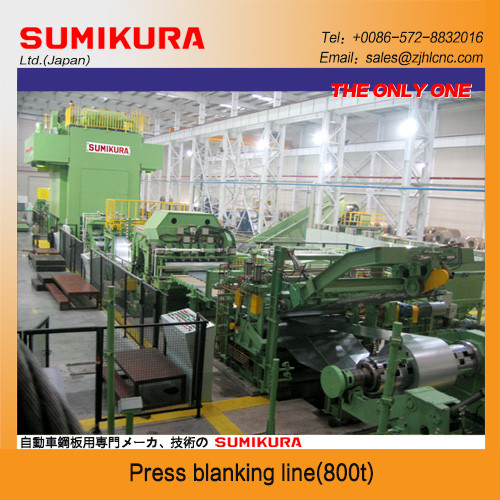
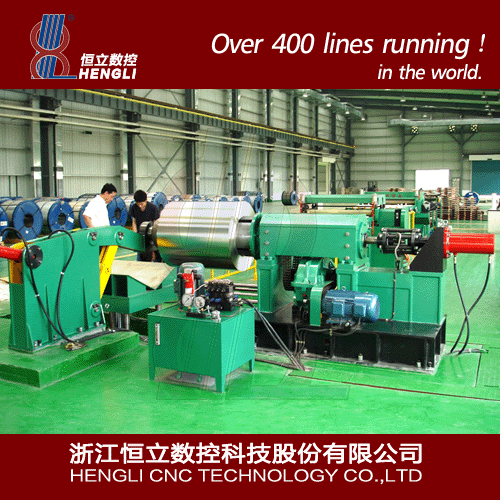
A press blanking line is a coil-processing system that uncoils, levels, and cuts flat sheet stock into blanks ready for stamping presses. Unlike a simple shearing machine, a modern blanking line is a continuous production cell: an uncoiler feeds the strip through straightening and leveling, a servo feed controls length with micron-level repeatability, and a shear head cuts the blank shape. Finished blanks then move to an automated stacker.
In automotive applications the blank is not always a rectangle. Inner and outer body panels often require trapezoids, parallelograms, and curved outlines that maximize material yield. That is where oscillating and swing shear technology becomes essential, producing non-rectangular shapes at high line speeds without a separate blanking press.
Why Automotive Panels Need Dedicated Blanking Lines
Automotive stamping demands blanking equipment different from general-purpose cut-to-length lines in four ways:
- Shape flexibility: Rectangular blanks waste material on curved panel profiles. Lines that cut trapezoids and curves improve material utilization by 5 to 12 percent, decisive at automotive volumes.
- Edge quality: Burrs and shear droop on a blank edge transfer directly into the stamped part. Automotive-grade blanking keeps cut edge quality consistent across the full coil width and length.
- Flatness: Leveled, stress-free blanks reduce springback and wrinkling in the draw die. Dedicated lines integrate precision levelers sized for automotive sheet.
- High throughput: Panel programs run at high strokes per minute. The line must keep pace with the press line and stack blanks in an orderly pattern for robotic destacking.
Because these requirements interact, automotive blanking lines are engineered as a system, not a collection of standalone machines.
Oscillating Shear Technology
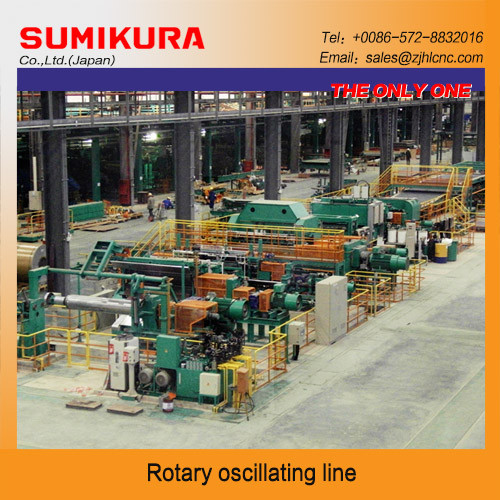
The heart of a modern automotive blanking line is the oscillating shear, also called a rotary or swing shear. Instead of a straight guillotine cut, the head rotates and swings the blade as the strip moves, so the line cuts angled and contoured blanks while running continuously. The result is a flying shear that never stops the strip, which makes high-speed non-rectangular blanking economical.
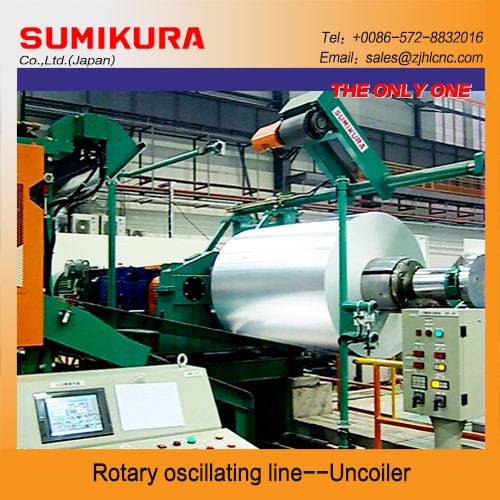
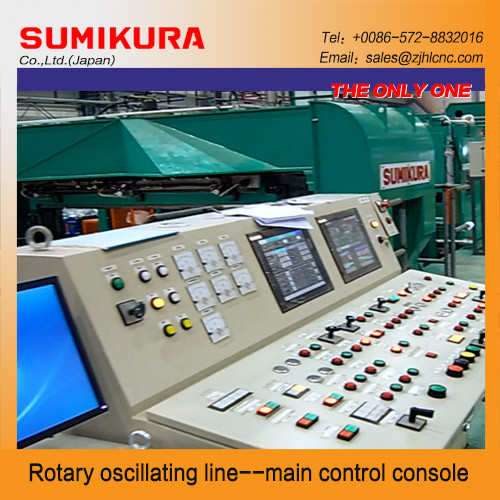
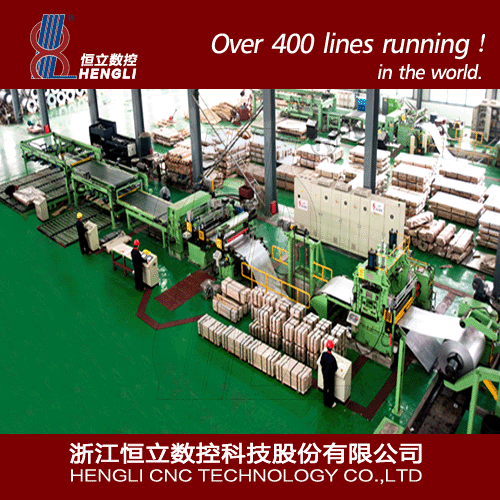
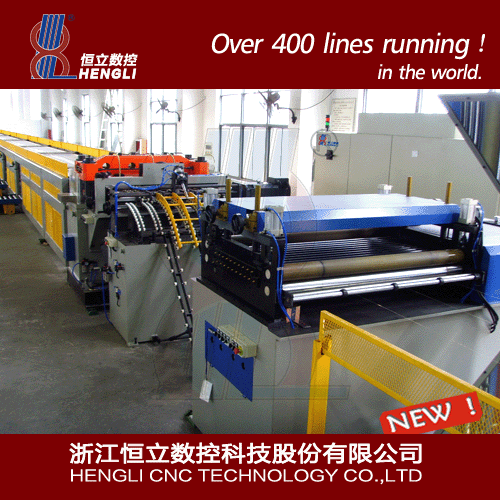
In a typical oscillating blanking line, the coil passes through the uncoiler, straightener, and leveler, then enters the servo feed and oscillating cutting head. The head follows a programmed motion profile for each blank shape, cuts on the fly, and hands the blank to a belt conveyor. Layout changes are software-driven, so switching between door outer blanks and fender blanks is a matter of recipe selection, not mechanical changeover. For a plant running multiple panel programs on one line, that flexibility is the biggest reason to choose oscillating shear technology.
Automated Stacking and Material Handling
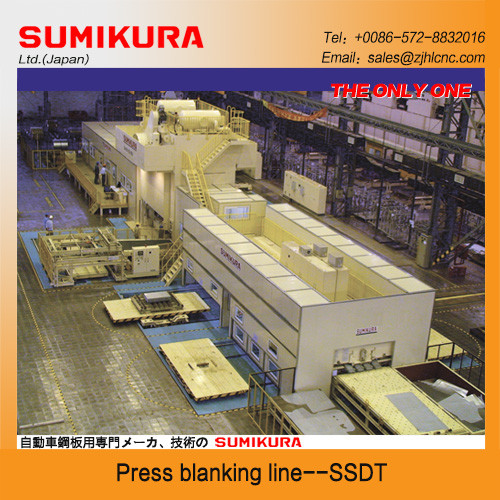
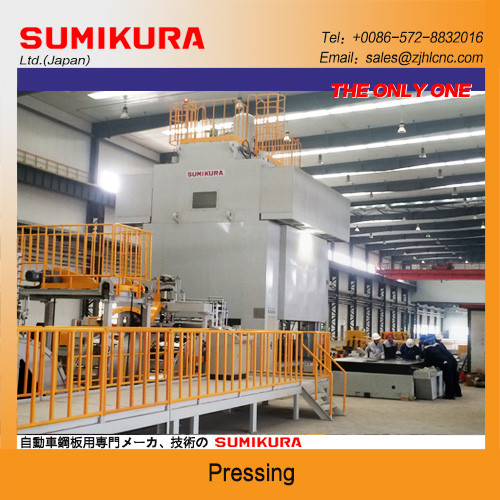
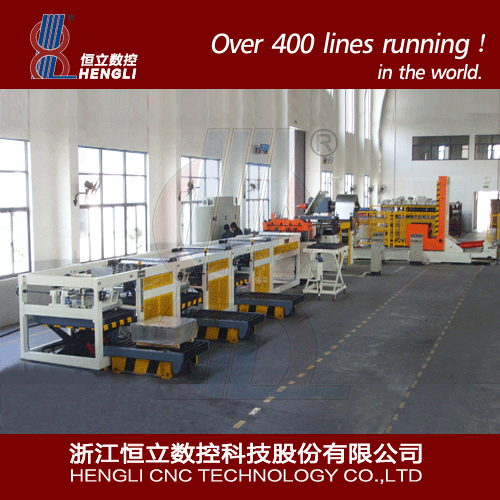
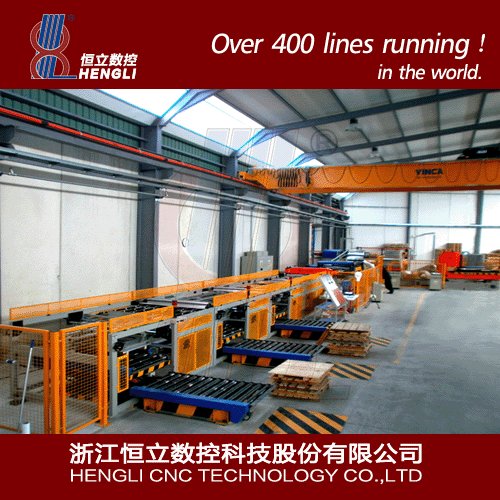
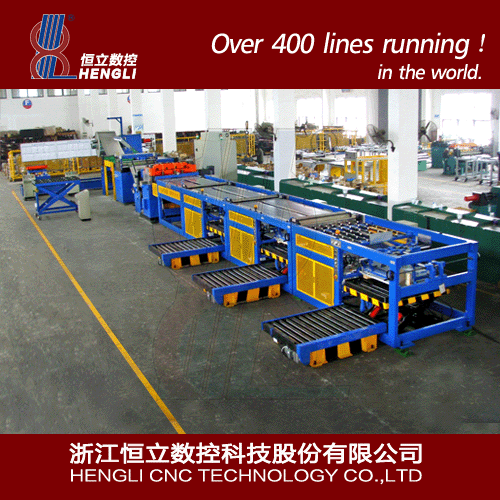
Cutting the blank is only half the job; the other half is getting it into an orderly stack without scratches, dents, or misalignment. Modern lines integrate belt conveyors, turnover stations, and automatic stackers that place each blank with controlled deceleration. A well-designed stacker protects the class-A surface of outer panels and keeps stack alignment tight enough for robotic destacking at the press.
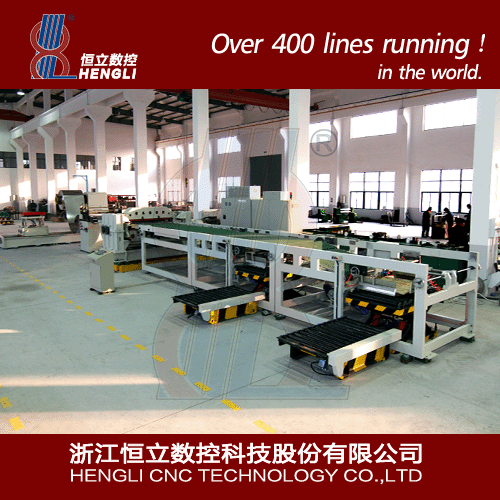
Key features in automotive stacking include magnetic or vacuum separation for oily sheets, air-float tables to prevent surface marks, stack height and weight detection, and automatic pallet exchange so the line never stops when a stack is full. Some lines use a double stacker arrangement, with one station receiving long panels and the second handling shorter blanks, so both run without idle time. Because stacking is where most surface damage occurs, treating it as a first-class automation problem separates an automotive-grade line from a general-purpose one.
Online Inspection and Quality Control
Automotive panel programs cannot afford to discover a bad blank after it reaches the press line. Online inspection systems monitor the process continuously and flag deviations the moment they occur.
Key inspection points on an automotive blanking line: strip width and thickness monitoring at the uncoiler, leveler gap and flatness feedback, shear blade wear and cut edge condition, blank length and angle measurement after every cut, and surface and burr checks before stacking. Combined with recipe-driven parameters, these checks keep the line inside specification even during long runs.
Inline measurement also feeds back into the process. If blank length drifts, the servo feed compensates automatically; if edge quality degrades, the system alerts maintenance before the blade damages a run of panels. This closed loop holds automotive tolerances across millions of blanks per year.
Flying Shear and Cut-to-Length Alternatives
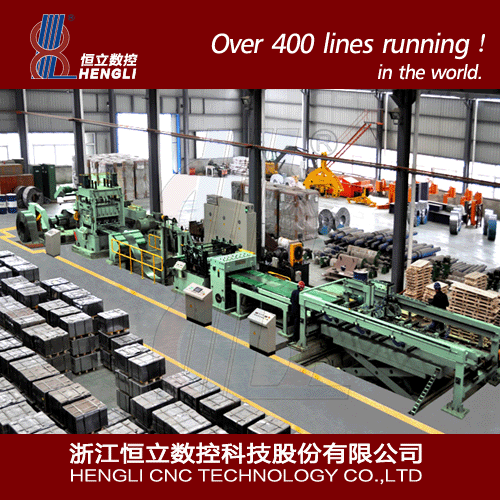
Not every automotive blank is non-rectangular. Straight blanks for structural and reinforcement panels are often produced on flying shear lines or high-speed cut-to-length lines, which are simpler and lower in capital cost. A flying shear cuts while the strip moves, so throughput stays high, while a conventional cut-to-length line stops the strip for each cut and suits heavy-gauge or mixed-program work.
Many stamping plants combine both technologies: a flying shear line for high-volume rectangular blanks and an oscillating line for contoured outer panels. Both share the same uncoiling, leveling, stacking, and quality infrastructure, simplifying spare parts and operator training.
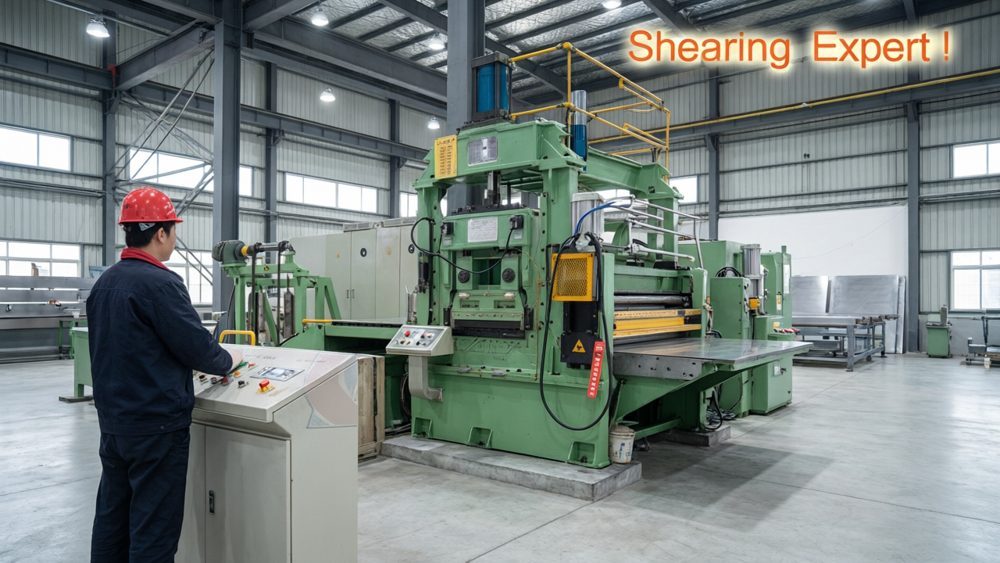
Scroll Cutting Lines for Nested Blank Layouts
For high-yield nesting of small and medium panel blanks, scroll cutting lines use a rotary or swing die head to cut interlocking patterns across the strip width. Instead of cutting one blank at a time, the scroll head cuts multiple blanks side by side in a nested arrangement, dramatically improving material utilization for brackets, reinforcements, and small structural panels. Digital-controlled scroll lines store multiple layout recipes and switch between them in minutes, making them a flexible companion to a main oscillating blanking line.
How to Choose the Right Automotive Blanking Line
Selecting a blanking line starts with the panel program, not the machine. Work backwards from the largest blank size, the material grade and gauge range, the required shapes, and the annual volume. Four questions cover most of the decision:
- What blank shapes do you need? Rectangles only point to a flying shear or cut-to-length line; trapezoids and curves require an oscillating shear.
- What is your gauge range? The leveler and shear capacity must match the thickest and strongest material in your program, including high-strength steels.
- How fast must the line run? Match line speed and stacking automation to the press line cycle so blank supply never becomes a bottleneck.
- What quality standards apply? Class-A outer panels demand stricter flatness, edge, and surface handling than structural blanks, driving the leveler and stacker specification.
A supplier with in-house engineering can adapt the uncoiler, leveler, shear head, and stacker to your exact coil sizes and blank layout, worth more than any single catalogue specification.
Frequently Asked Questions
What is the difference between a blanking line and a cut-to-length line?
A cut-to-length line produces rectangular sheets by stopping or flying-cutting the strip at fixed lengths. A blanking line adds shape capability: with an oscillating or scroll shear head it cuts trapezoids, parallelograms, and contoured blanks ready for the stamping press, so material is used far more efficiently.
Why is oscillating shear preferred for automotive outer panels?
Outer panels have curved, tapered outlines. Oscillating shear cuts these shapes on the fly without stopping the strip, combining high throughput with the shape flexibility that keeps material utilization high and blank quality consistent.
Can one line handle both steel and aluminum panels?
Yes, if the line is specified for it. The leveler must handle aluminum's different yield behavior, the feed and shear must manage lighter-gauge material without marking, and the stacker needs proper separation and surface protection. Tell your supplier the full material matrix before configuration.
How important is automatic stacking for automotive panels?
Critical. Class-A surfaces are easily scratched or dented during handling, and robotic destacking requires precise stack alignment. Automated stackers with controlled placement, air float, and pallet exchange protect surface quality and keep the press line fed without operators in the loop.
Closing Summary
A press blanking line is the foundation of every automotive panel program. Oscillating shear technology delivers the shape flexibility and throughput that contoured outer panels demand, automated stacking protects surface quality, and online inspection holds automotive tolerances over millions of blanks. Whether you run a flying shear line, a scroll cutting line, or a full oscillating blanking line, the principle is the same: the blank defines the panel, so invest in the line that produces it right the first time. Talk to an experienced blanking line manufacturer about your panel mix, material range, and target volumes before committing.
Browse our press blanking line products or contact our engineering team to discuss your automotive panel blanking project.