
Oscillating Blanking Lines: How They Revolutionize Automotive Panel Production
Oscillating Blanking Lines: How They Revolutionize Automotive Panel Production
Automotive body panels are among the most demanding steel parts in manufacturing. For decades, panel blanks were cut on conventional shearing lines with fixed rectangular patterns, then fed into stamping presses that trimmed away significant amounts of steel as scrap. Oscillating blanking line technology changes that equation. By combining a continuously moving strip with a shear head that oscillates at high speed, these lines cut trapezoidal, curved, and nested panel blanks directly from coil, improving material utilization by 5 to 15 percent while reducing die costs and raising production efficiency.
This article explains how oscillating blanking lines work, why they save material, and how press shops and automotive suppliers can integrate them into panel production.
What Is an Oscillating Blanking Line?
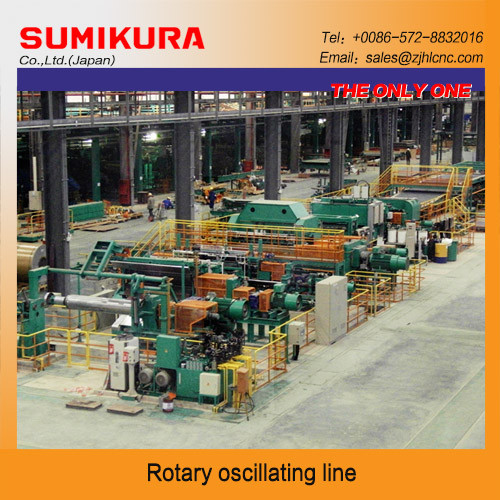
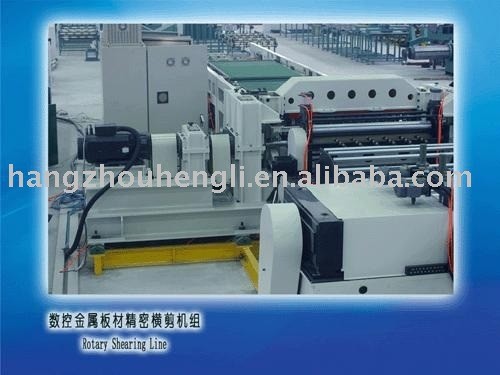
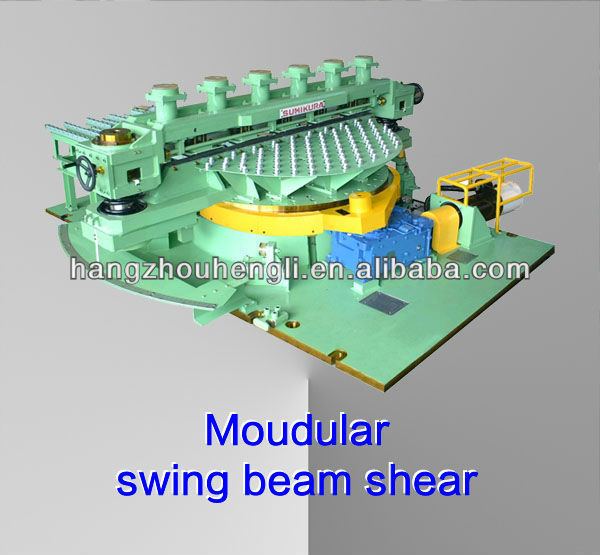
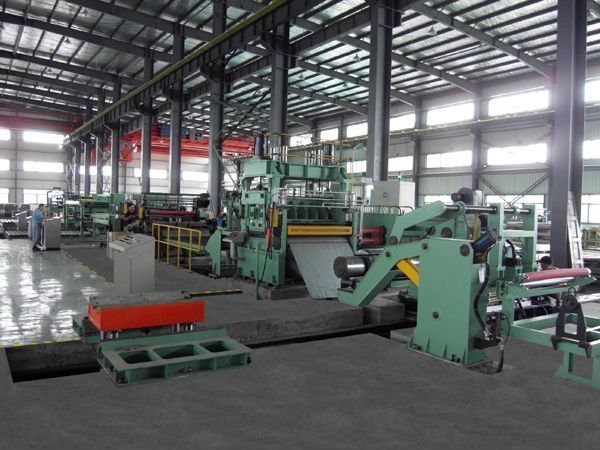
An oscillating blanking line, also called a rotary oscillating shear line or pendulum shear line, processes coil stock into finished blanks without stopping the strip. A conventional cut-to-length line stops the strip for every cut, which limits speed and forces every blank to be rectangular. An oscillating line instead mounts the shear head on a carriage that moves with the strip: the head accelerates to strip speed, cuts on the fly, then returns for the next cycle. Because the strip never stops, line speeds rise dramatically, and because the shear can angle during the cut, the blade does not have to be perpendicular to the strip edge. That capability unlocks trapezoid, parallelogram, and curved contours impossible on a fixed square shear.
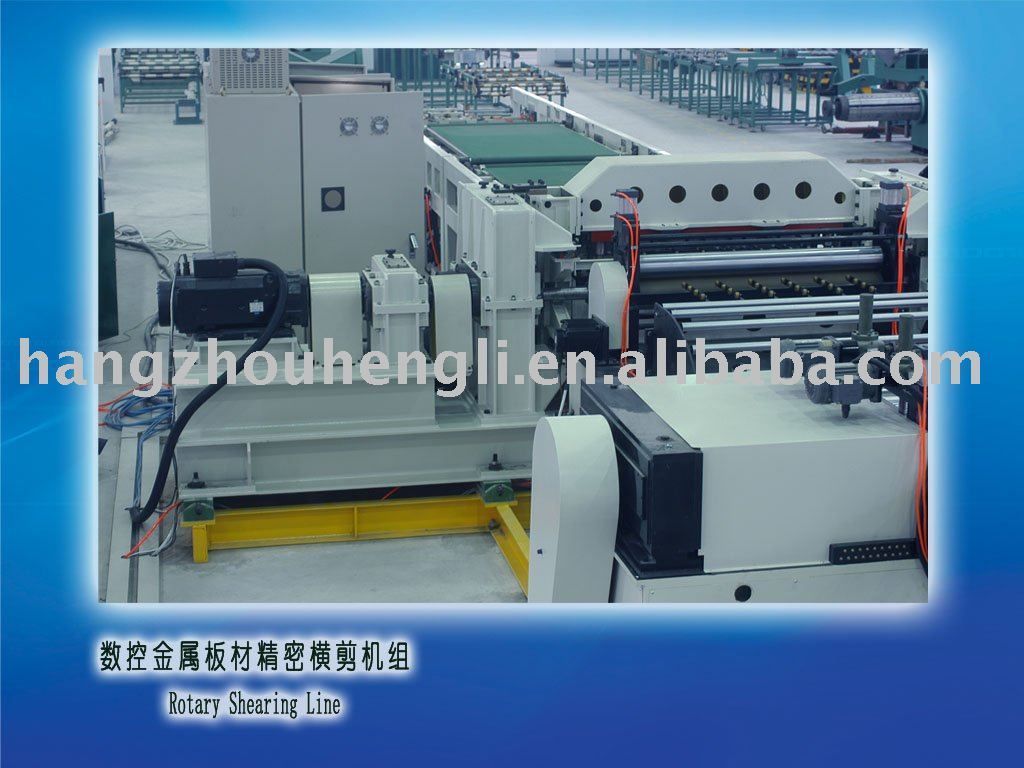
Modern servo drives, digital controllers, and precision blade guidance have made the technology fast and reliable enough for automotive-grade production. Today's rotary oscillating shear lines combine a flying pendulum shear with automatic coil feeding, leveling, and dual stackers to run body panel blanks in one continuous operation.
Higher Material Utilization: The 5-15% Saving
Material is the largest cost in any stamping operation, often 60 to 70 percent of total blank cost. In conventional square blanking, a rectangular blank is cut around an irregular panel contour, and everything outside the rectangle becomes skeleton scrap. Because the oscillating shear can cut at an angle, trapezoidal blanks can be nested side by side in opposite orientations, a technique called chevron or V-nesting. Curved contours can be followed more closely with stepped or angled cuts, and scroll-cutting dies add complex profiles in the same pass.
The result is a typical material saving of 5 to 15 percent compared with square blanking, and in some body panel applications the improvement is even larger. On a line processing 100,000 tons of steel per year, a 10 percent saving means 10,000 tons of coil that never needs to be purchased or recycled, representing millions in annual cost reduction. That is why automotive suppliers increasingly specify oscillating blanking for new lines.
Lower Die Costs: Shear Blades Instead of Trim Dies
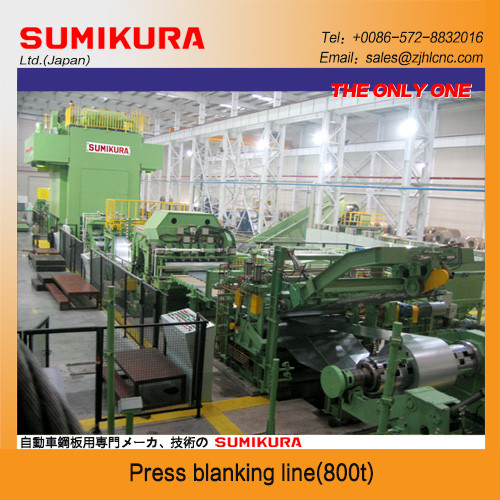
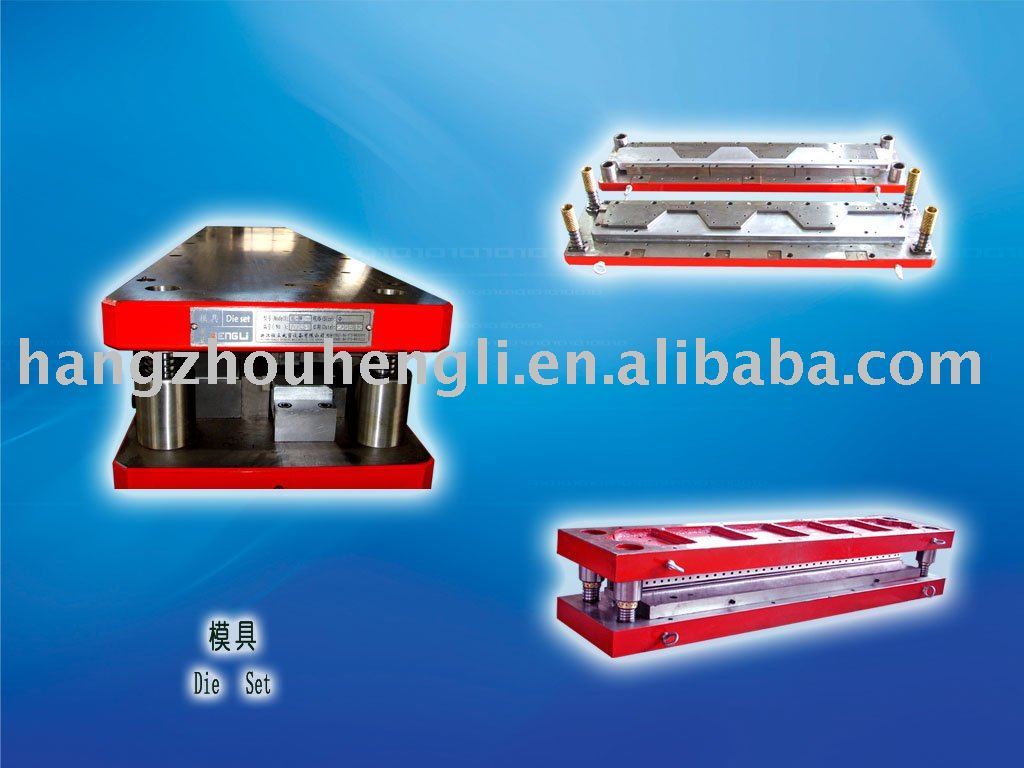
Conventional panel production often relies on large trim dies inside the stamping press to cut the blank to its final contour. Trim dies are expensive to design, machine, and maintain, and every new panel model requires a new die set with a long lead time. Oscillating blanking shifts much of that contour cutting out of the press and into the blanking line, where the "tooling" is a set of shear blades and, where needed, scroll dies. A shear blade is far cheaper than a trim die, can be resharpened rather than rebuilt, and can be changed quickly when panel dimensions change.
For suppliers producing multiple panel variants, this is a decisive advantage. Instead of carrying a dedicated trim die for every part number, a blanking line can switch cutting programs in minutes and use the same blade geometry across a family of similar panels. Scroll and straight dies add the final contours for complex inner panels at a fraction of the cost of press trim tooling, and they run at line speed without occupying press time. The result is lower capital investment, smaller tool maintenance budgets, and shorter time to production for new models.
Higher Production Efficiency and Throughput
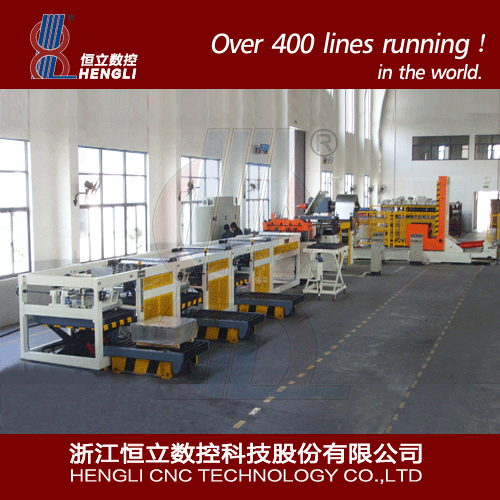
Because an oscillating blanking line cuts without stopping the strip, it removes the biggest speed limitation of conventional shearing. Line speeds that were limited by the stop-start cycle of a fixed shear can increase substantially, and the flying motion keeps the blade working continuously. Modern lines reach cutting rates that let a single machine feed several downstream press lines, replacing two or three slower installations. Automatic stacking systems sort blanks by program and direction, so finished pallets leave the line ready for the press shop without manual handling.
Efficiency also comes from digital control. Operators enter coil thickness, strip width, blank geometry, and batch quantity on a touchscreen; the controller synchronizes the uncoiler, leveler, measuring system, shear carriage, and stackers as one unit. Changeover between panel programs takes minutes rather than hours, and one operator can supervise the entire line. For suppliers running many panel variants, this combination of speed, automation, and fast changeover directly increases output per shift.
Automotive-Grade Quality: Leveling, Cleaning, and Precision
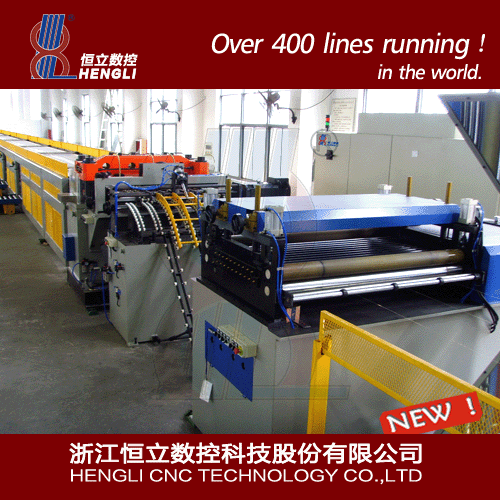
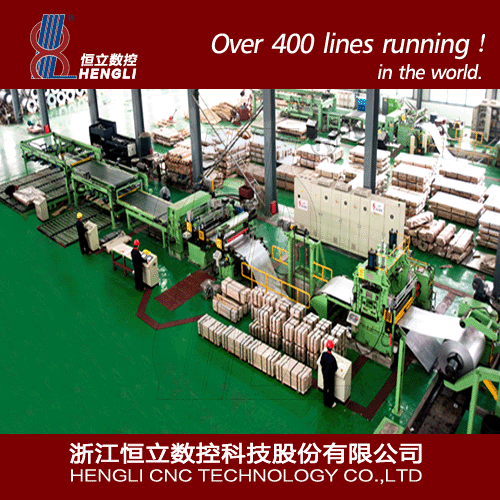
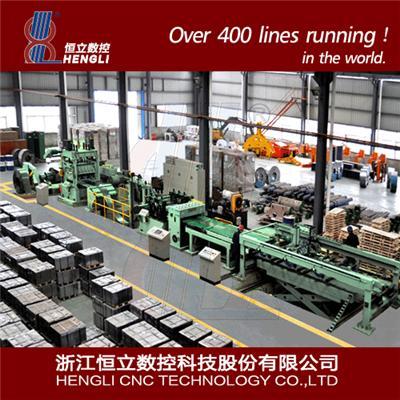
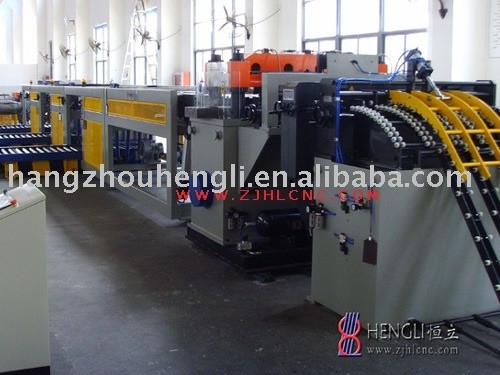
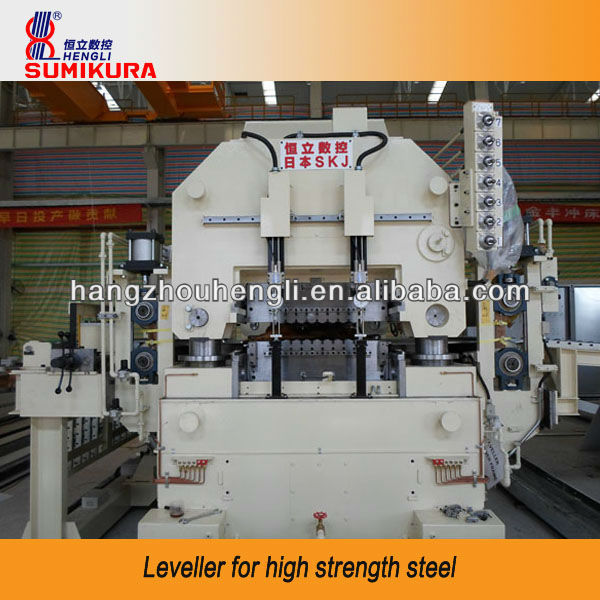
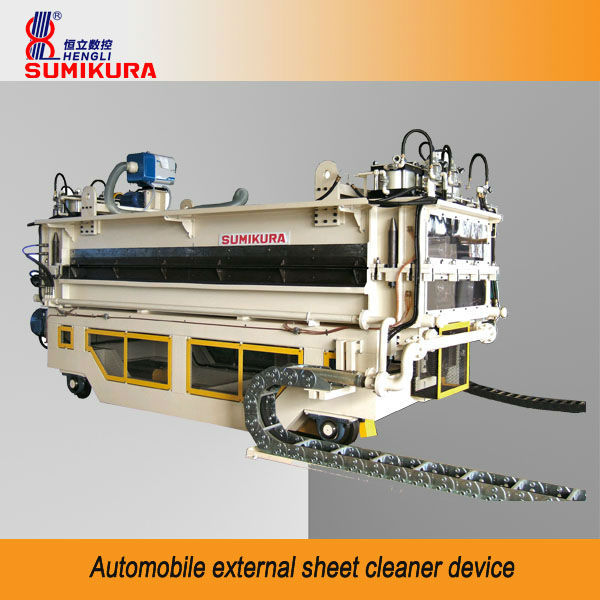
Material savings and speed mean nothing if the blank quality does not satisfy an automotive customer. A precision leveler flattens the strip before cutting, which is essential for exposed outer panels where any residual coil shape will show through after forming. High-strength steels are stiffer and harder to flatten, so the leveler must be sized for the actual material range. Sheet cleaners remove surface contamination before the blank reaches the press, protecting part quality and press die life.
Cutting accuracy is maintained by the digital measuring system, which tracks strip length continuously and compensates for speed changes in real time. Because the shear cuts on the fly, blade timing and strip position must be synchronized within fractions of a millimeter; modern servo control achieves this consistently at production speed. The payoff is dimensionally stable blanks with clean, burr-free edges that enter the stamping die exactly where the process plan expects them.
Coil Feeding and Line Integration
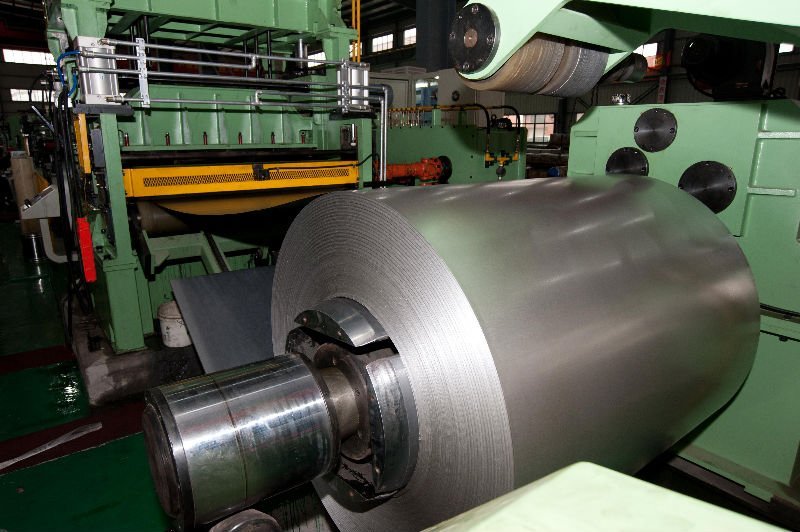
An oscillating blanking line is only as good as its material flow. A downender turns coils from the storage position into the uncoiler, reducing crane time and coil damage. The uncoiler and coil straightener then deliver flat, evenly tensioned strip into the leveler, so the shear always sees stable material. Automatic coil changing and threading cut non-productive time between coils to a minimum.
Integration extends beyond the machine itself. Because the line is digitally controlled, it can connect to the plant's production planning system: blank programs, coil assignments, and batch counts are downloaded directly, and production data from each coil is recorded for traceability, documentation that automotive customers increasingly require.

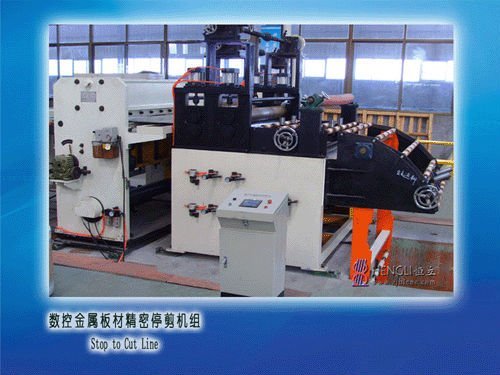
Is an Oscillating Blanking Line Right for Your Plant?
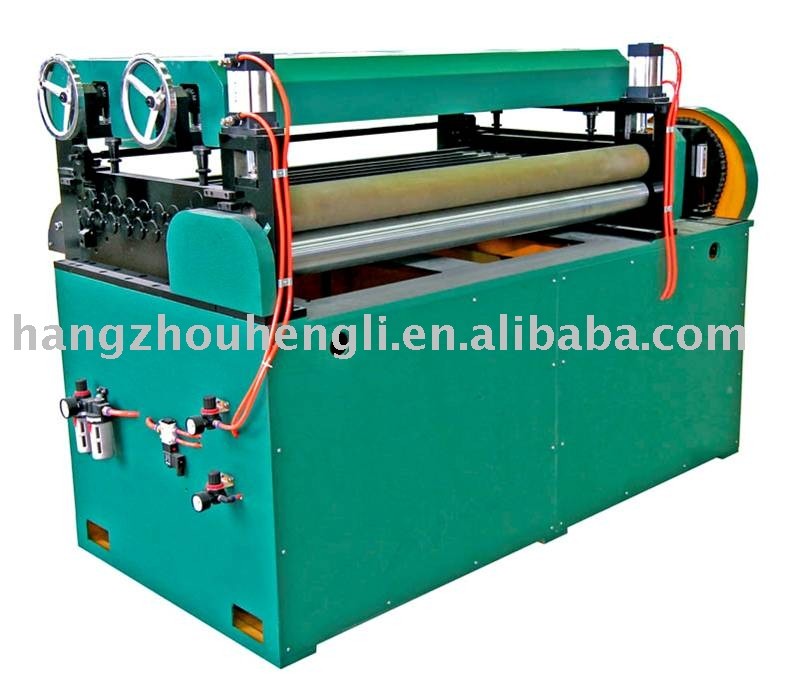
Oscillating blanking delivers the largest benefits when three conditions are met: panel geometry is non-rectangular, material cost is a significant share of product cost, and production volume justifies the investment. Automotive body panels meet all three, which is why the technology is now standard in the industry. For processors that also cut silicon steel, aluminum, tinplate, or mild steel, the same line can often handle these materials with simple parameter changes, spreading the investment across multiple product lines.
Key Benefits of Oscillating Blanking Lines
- Material savings of 5-15%: chevron nesting and contoured cutting reduce skeleton scrap.
- Lower tooling cost: shear blades and scroll dies replace expensive press trim dies.
- Higher throughput: continuous strip motion removes the stop-start speed limit.
- Fast changeover: digital programs switch panel geometry in minutes.
- Automotive-grade quality: leveling, cleaning, and synchronized cutting for stable blanks.
- Full traceability: production data from every coil supports customer documentation.
Hengli designs and builds rotary oscillating shear lines, blanking lines, and the supporting coil handling, leveling, cleaning, and stacking equipment that completes an automotive panel blanking cell. Explore the full range of blanking and shearing lines, or contact us to discuss a line configured around your panel program, materials, and production targets.
Frequently Asked Questions
How much material can an oscillating blanking line save compared with square blanking?
Typical savings are 5 to 15 percent, depending on panel geometry and nesting strategy. For curved and trapezoidal body panels, chevron nesting and contoured cutting recover material that square blanking would discard as scrap.
Does an oscillating blanking line replace stamping dies?
It replaces or reduces trim die work, not the forming dies. The line cuts the blank contour before stamping, so presses no longer need large trim dies for many panels; forming dies remain necessary, but blanks arrive ready for forming.
Can the same line handle different panel sizes and shapes?
Yes. Shear angle, cut program, and stacking are controlled digitally, so changing panels takes minutes rather than hours. This suits suppliers running many part numbers in smaller batches.
Is oscillating blanking suitable for high-strength steel?
Yes, provided the leveler and shear are sized for the material's strength and thickness. High-strength grades are stiffer and require more leveling power and shear capacity, which is why the line must be engineered around the actual material range from the start.
What is the payback period for an oscillating blanking line?
Payback depends on volume and material prices, but the combination of material savings, lower tooling costs, and higher throughput typically delivers returns faster than conventional line upgrades. A feasibility study based on your blank program and steel consumption will give a reliable figure.
Conclusion: The New Standard for Automotive Panel Blanking
Oscillating blanking lines have moved from a niche technology to the standard approach for automotive panel production. By cutting on the fly with an oscillating shear, they recover 5 to 15 percent of the material that square blanking wastes, cut tooling costs by replacing trim dies with shear blades and scroll dies, and raise throughput by eliminating the stop-start cycle of conventional shears. Integrated leveling, cleaning, stacking, and digital control complete the picture, delivering blanks ready for the press at automotive-grade precision.
For stamping plants and automotive suppliers, the question is no longer whether to adopt oscillating blanking, but how quickly. Talk to Hengli about a rotary oscillating shear line engineered for your panel program, and let the material savings start working for you.