
Scroll Cutting Lines for the Can Making Industry: Precision and Speed
The can making industry runs on extremely tight economics. A single can end costs fractions of a cent to produce, yet the blanking stage, where flat coil is converted into shaped sheets for can bodies, ends and lids, decides more of the final cost than almost any other step. For tinplate and aluminum container manufacturers, the answer is the scroll cutting line: a high-speed blanking system that combines wave-shaped die cutting with continuous coil processing to deliver precision blanks at speeds conventional rectangular shearing cannot match.
Hengli (stock code 430676) has built scroll cutting lines, scroll dies and sheeting equipment for the can making industry since 2005, pairing waveform dies with servo-driven feeding, flying shears and automatic stacking. This article explains how scroll cutting works, where its precision comes from, and how to configure a line for your production targets.
Scroll cutting at a glance
- Line speeds up to 175 cuts/min on scroll shearing configurations
- Wave-shaped nesting typically saves 5 to 15 percent of material versus rectangular blanking
- Scroll die cutting accuracy in the range of plus/minus 0.05 mm
- Processes tinplate and aluminum strip from around 0.15 to 0.5 mm for can making
- Full-line automation from uncoiling to stacked, counted blanks
Why Scroll Cutting: Wave Nesting and Material Yield
Can bodies and ends are round or oval, but coil is a rectangle. If a line simply shears rectangular sheets and stamps circles from them, the corners of every sheet become scrap, and the more ends a plant produces, the more that scrap costs. Scroll cutting solves this with a waveform pattern: the scroll die cuts a staggered wave along the strip, so round and oval blanks nest together like eggs in a tray, each wave carrying two partial rows of blanks.
The result is a material utilization gain of typically 5 to 15 percent over straight cutting for round can ends, and often more for small diameters where nesting density is highest. On a line consuming hundreds of tons of tinplate per month, that difference is a direct margin gain, which is why scroll cutting has become the standard blanking method in the beverage and food can industry rather than an optional upgrade.
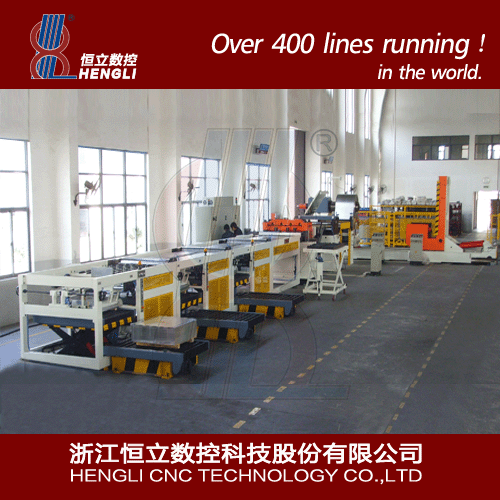
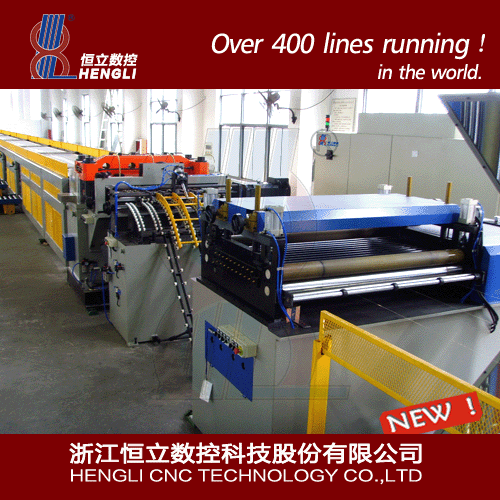
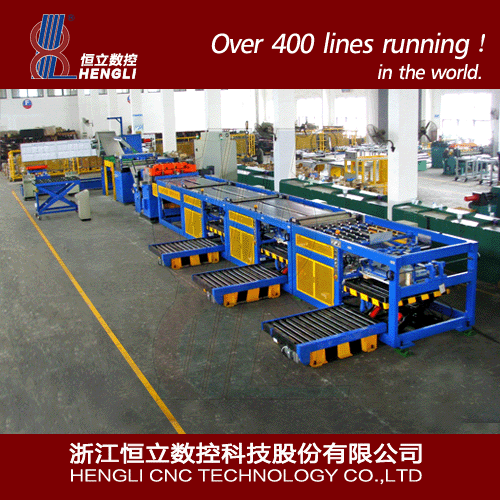
Hengli offers a full range of scroll cutting lines, from entry-level models to high-output configurations for large beverage end producers.
The Scroll Die: Precision at the Core
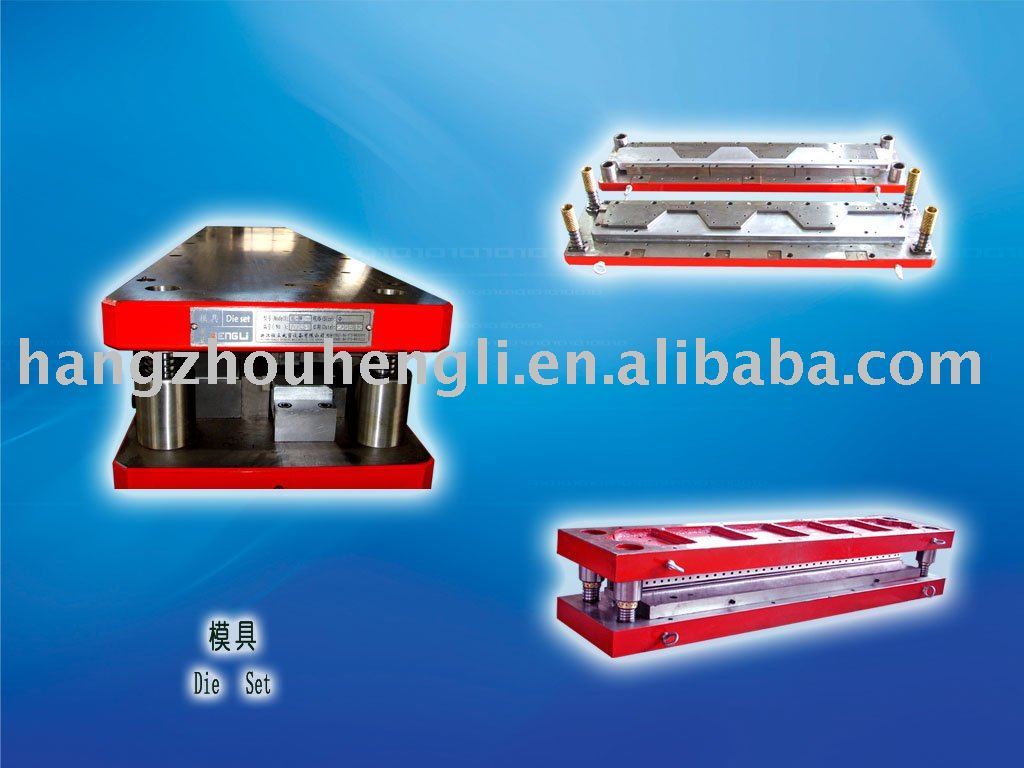
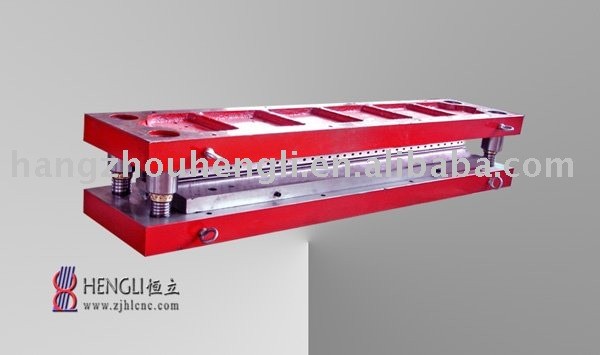
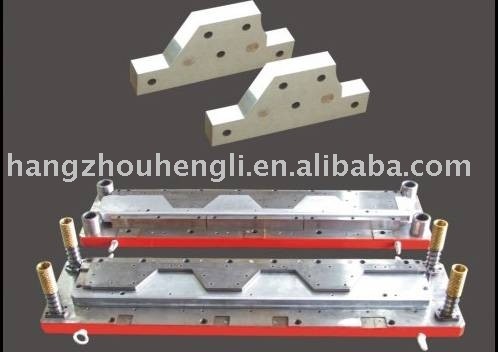
The scroll die is the heart of the line. Unlike a straight shear blade, it carries a precisely ground waveform profile, and every blank produced inherits that geometry. Because can ends must be perfectly round after stamping, and because any burr or deviation carries straight into the press and seaming process, die quality sets the quality ceiling of the whole plant.
Three factors define a good scroll die. The first is dimensional accuracy: blank width, wave pitch and profile radius must hold tolerances around plus/minus 0.05 mm, so the stamped end has consistent material distribution and withstands internal pressure. The second is cutting edge quality: a sharp, even edge produces clean blanks with minimal burr and rollover, protecting downstream tooling. The third is material and heat treatment: scroll dies are made from high-alloy tool steel with hardened edges, because a can plant runs dies for millions of cycles between maintenance stops.
Hengli supplies scroll die sets matched to its lines and to customer blank layouts, including straight and scroll combinations for the double-row patterns typical of small end diameters, designed around your can dimensions, end profile and material.
From Coil to Stacked Blank: The Production Flow
A scroll cutting line turns a heavy coil into counted stacks of shaped blanks in one continuous pass, with operators supervising rather than handling material between stations:
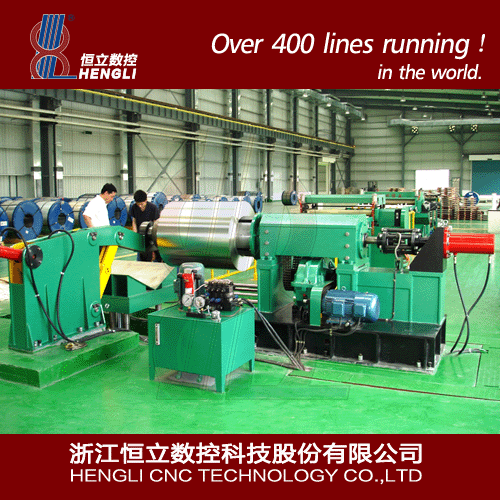
- Uncoiling. A hydraulic mandrel uncoiler feeds tinplate or aluminum strip with automatic edge control keeping the strip centered.
- Leveling and cleaning. A precision leveler flattens coil set, and an optional cleaning and oiling station protects the coated surface.
- Servo feeding. A servo-driven feed advances the strip to exact wave pitch, coordinating with the die cycle.
- Scroll cutting. The scroll die or flying shear cuts the waveform at high cycle rates, producing nested blanks.
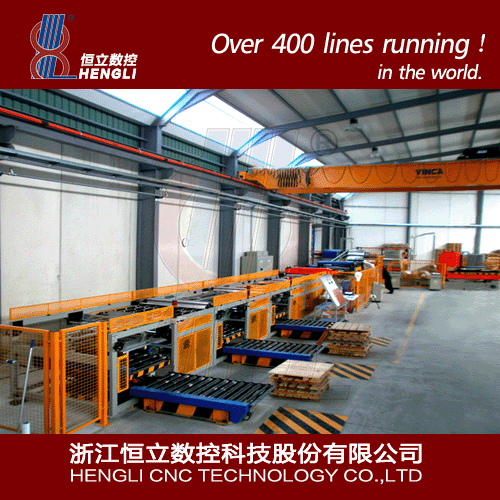
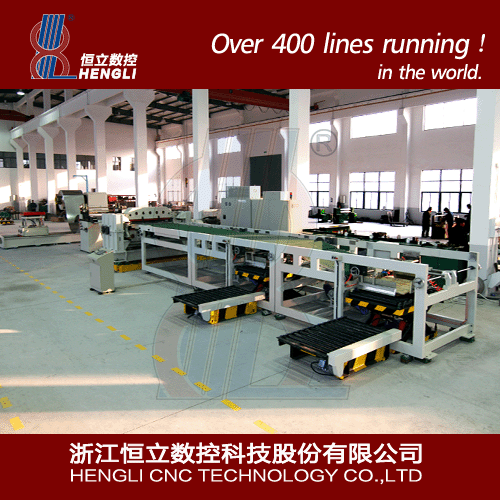
- Stacking. Blanks are conveyed to an automatic stacker, aligned, counted and palletized for the press shop.
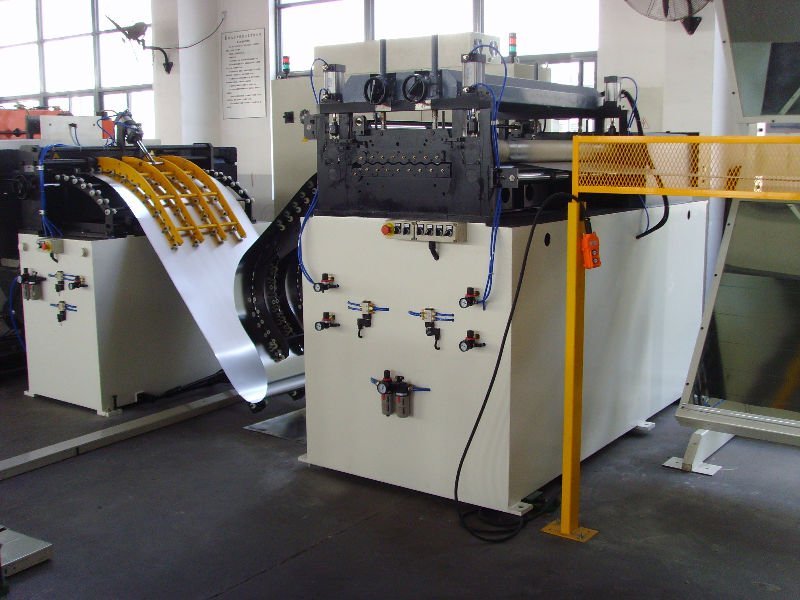
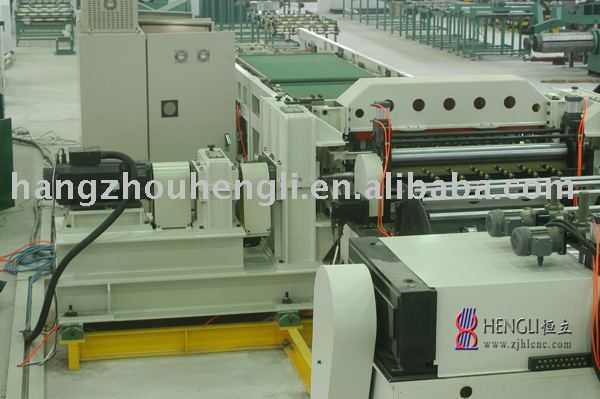
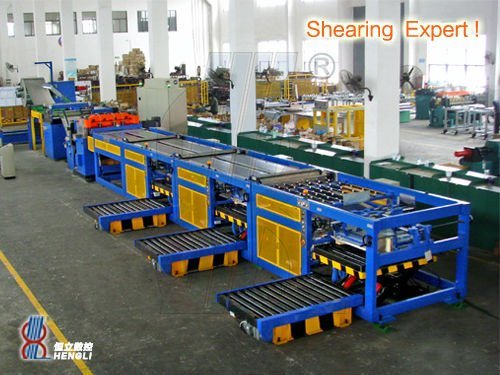
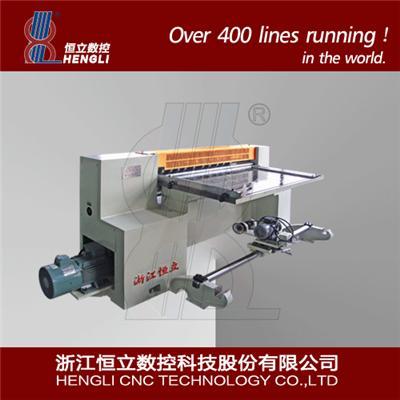
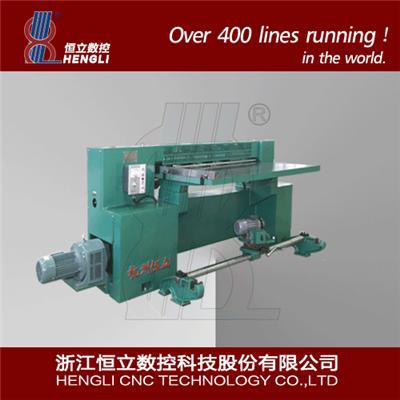
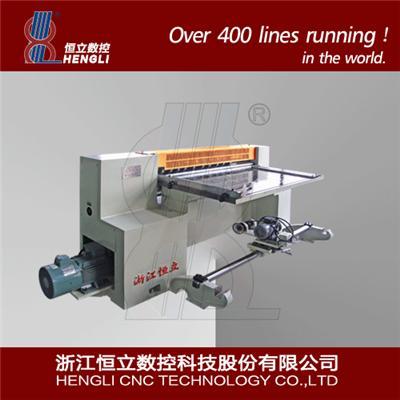
Digital control ties these stations together. Hengli's digital-controlled rotary cutting lines use programmable length setting, automatic speed synchronization and touchscreen diagnostics, so changing blank sizes is a matter of entering parameters and exchanging the die, not re-tooling the line. The sheeting machine for tinplate and aluminum shown below suits plants that combine scroll blanks with plain rectangular sheets in one program.
High-Speed Configurations for Volume Output
Beverage can production runs into hundreds of millions of ends per year, and the blanking line must keep pace with the press shop without becoming a bottleneck. Speed on a scroll line comes from four areas: the die cycle rate, the feeding system, the shear mechanism and the material handling around the line.
Hengli's high-speed models show how these combine. The Scroll Coil Cutting Line HL-1200BS6 reaches up to 150 cuts per minute, and the Scroll Shearing Line HL-1200BS7 up to 175. Higher cycle rates demand stiffer frames, balanced rotating parts and faster servo response, which is why high-speed scroll lines use heavier construction than general-purpose shearing lines. With two or more lines in parallel, a plant can feed several presses continuously across three shifts.
Speed is only valuable if consistent. Automatic stackers keep finished blanks moving out of the cutting area, quick-change die fixtures shorten size-change downtime, and programmable controllers hold speed and length accuracy as the coil diameter changes.
Tinplate and Aluminum: Matching the Line to the Material
Tinplate and aluminum are different materials, and a scroll line must be configured for the one you process. Tinplate, used for food cans, aerosol cans and general line packaging, is thin steel with a protective tin or chromium coating: stiff enough to hold its shape in the die, but easily scratched, so roll surfaces, guides and stacking tables must be smooth. Aluminum, used mainly for beverage and easy-open ends, is softer and lighter, cuts cleanly at high speed, but is prone to edge deformation and needs tight feeding control to keep the wave pattern accurate.
| Consideration | Tinplate (steel) | Aluminum |
|---|---|---|
| Typical thickness | 0.15 to 0.35 mm | 0.20 to 0.30 mm |
| Main applications | Food cans, aerosol, general packaging | Beverage ends, easy-open ends |
| Cutting behavior | Clean edge, holds shape | Soft, needs tight feed control |
| Surface protection | Coating scratch-sensitive | Scuff-sensitive, lighter handling |
| Key line features | Coated rollers, oiling station | Servo feed precision, soft stacker |
Most can plants also run slitting upstream of the scroll line, converting master coils into the exact strip widths the scroll die requires. Thin-strip slitting lines handle tinplate and aluminum from 0.2 mm upward, and matching slitting width precisely to the scroll pattern is one of the easiest ways to reduce edge scrap before blanking begins.
Selecting the Right Scroll Cutting Line
Every can plant starts from a different blank program. Work through these points with your equipment supplier before ordering:
- Blank dimensions and shapes: end diameter, body blank size, and whether straight blanks are needed alongside scroll blanks
- Material mix: tinplate, aluminum or both, and the thickness range you process
- Required output: cuts per minute and shifts per day, with headroom for future volume
- Coil handling: coil width, weight and whether an upstream slitter produces exact strip widths
- Die and tooling service: scroll die design for your blank layout, spare dies and regrinding support
- Automation level: manual, semi-automatic or fully automatic stacking and counting
How much material does scroll cutting save? For round can ends, wave nesting typically improves utilization by 5 to 15 percent versus rectangular blanking, depending on end diameter, die layout and strip width.
Can one line process both tinplate and aluminum? Yes. Lines are commonly specified for both, with coated rollers, adjustable feeding and interchangeable dies. Tell the supplier your full material program.
How often do scroll dies need maintenance? With proper cooling and lubrication, hardened dies run millions of cycles between regrinds; routine edge inspection keeps blank quality consistent.
Scroll cutting lines are the backbone of can blank production because they combine the two things the industry cannot compromise on: precision and speed. The wave-shaped die maximizes material yield, the servo-driven line keeps blanks accurate at high cycle rates, and the right configuration matches your material, volumes and growth plans. To review the full range of scroll cutting lines, scroll dies and slitting equipment, visit the Hengli products catalog, read more industry articles, or contact our engineers with your blank specifications for a line recommendation.